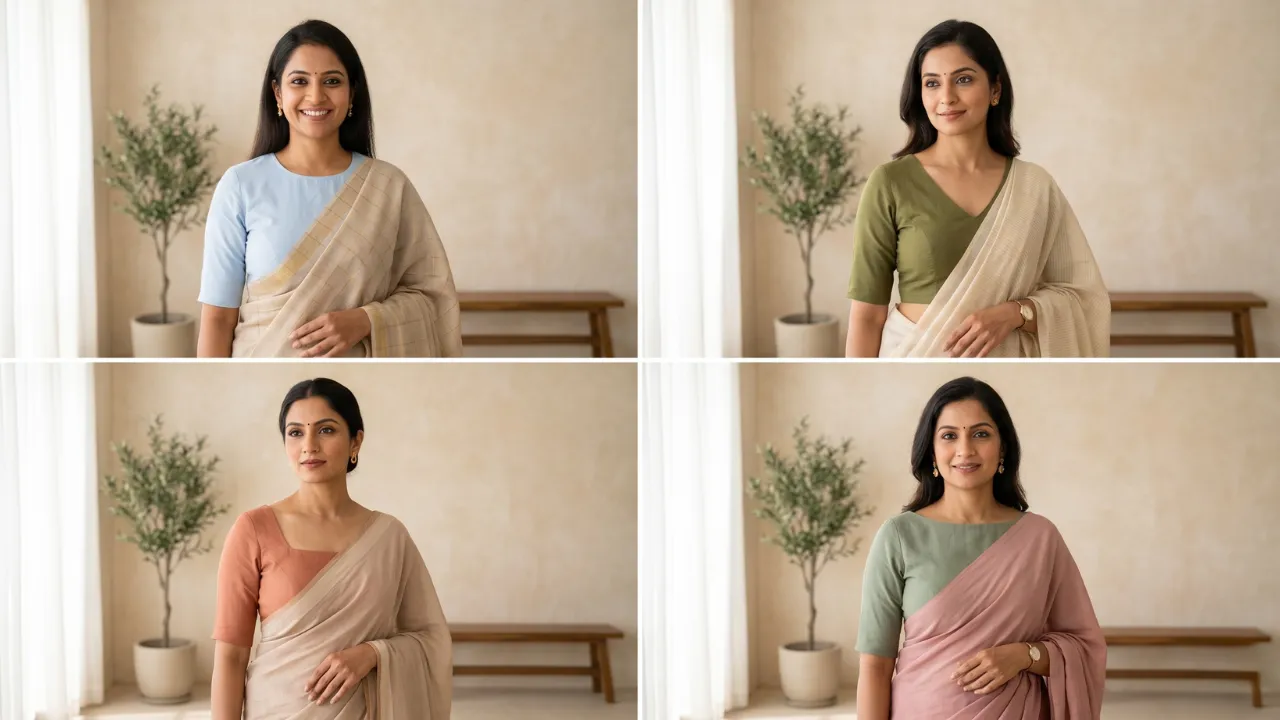
While intricate bridal couture and heavy zardosi embroidery often capture the spotlight on social media, any established custom tailoring shop knows where the real volume lies. The backbone of a successful boutique is the daily wear blouse. Professional corporate environments and the timeless appeal of cotton sarees require necklines that are both functional and elegant. These high-volume orders are essential for keeping your sewing machines running, optimizing material throughput, and ensuring steady cash flow. Below, we explore 20 simple blouse neck designs for 2026 that balance style with rapid, repeatable tailoring.
Classic, Elegant Simple Front Necks
Front necklines must strike a delicate balance between professional presentation and all-day comfort. For 2026, the leading blouse neck models include the timeless deep round neck, the clean shallow V-neck, the sophisticated corporate square neck, the graceful wide U-neck, and the modern minimalist boat neck. To elevate these designs into boutique-level pieces without adding hours of hand-embroidery, tailors can utilize micro-piping or thin contrast fabric bands along the seam lines. These simple additions ensure the necklines remain crisp and contemporary, perfectly complementing the fabric of a reliable cotton saree blouse.
Breathable, Comfortable Simple Back Necks
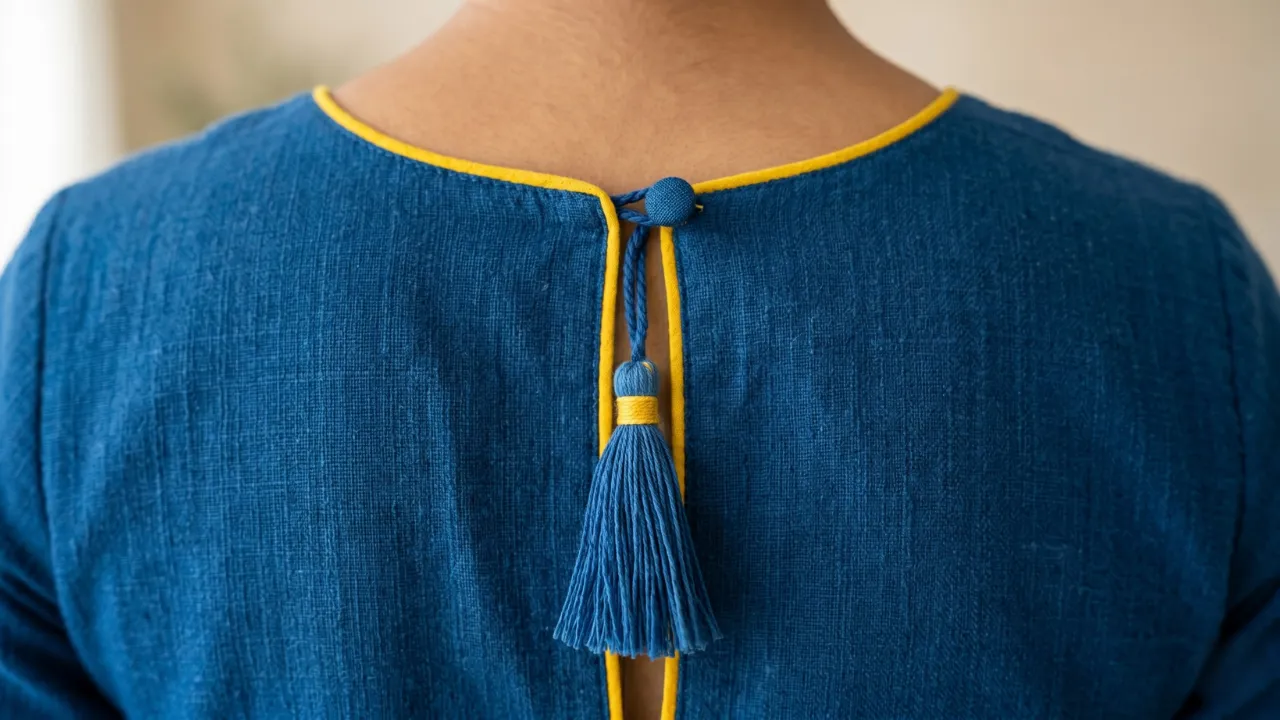
Garments intended for hot climates or long office commutes require a focus on breathability. When crafting an office wear blouse, traditional round back treatments, deep-U variants, and clean geometric square backs are top performers. Adding a single-button drop or a subtle keyhole allows for better ventilation, making them exceptionally well-suited for handloom cotton, soft linens, and airy cotton-silk blends. These layouts are not only comfortable but are also incredibly fast to execute during high-volume production.
Adding Premium Value with Minimal Effort
A plain daily wear blouse does not have to appear simple or inexpensive. Smart boutiques leverage cost-effective design accents to maximize their pricing structure. Applying a contrasting piped edge, dropping a single minimalist fabric latkan, or placing small wooden buttons along a placket transforms a basic pattern into a refined garment. These highlights provide a high-end look without inflating operational hours, enabling you to secure higher profit margins effortlessly.
Fulfillment Optimization: Stitch Faster with Tailoring CAD
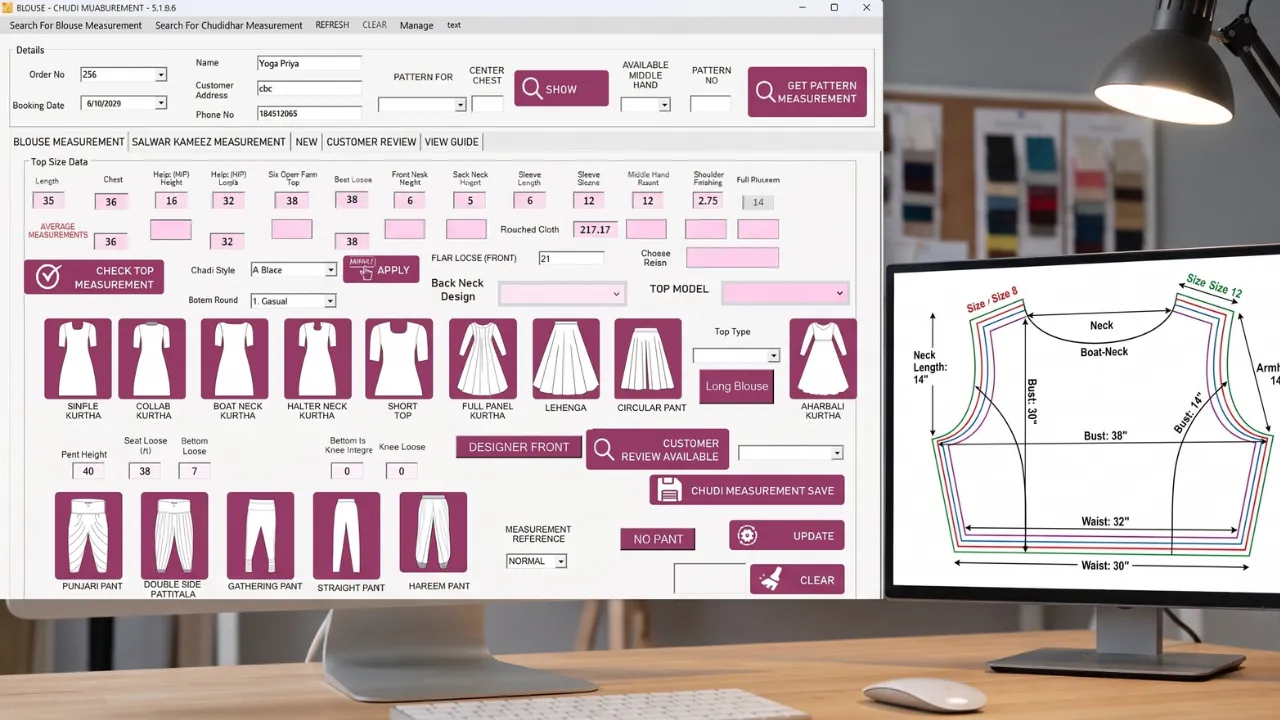
Managing a high volume of orders requires exceptional speed and absolute sizing consistency. If your cutting master is manually re-drafting standard neck patterns, your workshop is losing money. Manual marking invites sizing errors, leading to time-consuming alterations that erode your bottom line.
Fashion Dot offers a specialized tailoring CAD solution that resolves this bottleneck entirely. The software houses a pre-graded database containing all 20 essential front and back necklines. When a customer's specific measurements are entered, the system automatically recalibrates the pattern and adds exact seam allowances. By digitizing your pattern making process, you ensure that every blouse fits perfectly while significantly reducing production time. Whether you use automated laser cutting or manual tracing from printed patterns, this digital transition is the key to scaling your production. Ready to transform your workflow? Integrate Fashion Dot into your boutique today and see the difference in your daily throughput.
Matching a Simple Neck to the Fabric
Daily-wear blouses are cut on cotton far more often than on silk, and cotton has its own rules.
| Fabric | Necks that hold shape | Needs care |
|---|
| Cotton | Round, square, boat, U with piping | Deep V — stretches at the point |
| Cotton blend | Round, collar, high neck | Wide boat neck — slips off the shoulder |
| Handloom | Square, boat | Fine piping — the weave is too open |
| Soft silk | Round, sweetheart, small keyhole | Anything unlined below six inches |
| Linen | Round, square, collar | Curved cut-outs — they crease permanently |
The Numbers Behind a Comfortable Daily Blouse
Daily wear is judged on comfort rather than drama, and comfort is a set of measurements:
- Front neck depth – 6 to 7 inches. Deeper needs a lining even on cotton.
- Back neck depth – 5 to 7 inches, so it stays covered when she bends.
- Armhole ease – 1 to 2 inches, or the sleeve binds when she raises her arm.
- Bust ease – 1 to 1.5 inches for a fitted blouse worn all day.
- Sleeve round – taken at the fullest part of the upper arm, never at the elbow.
Write these on the order sheet in inches. “Normal” means something different to every cutter.
Why Daily Blouses Come Back for Alteration
The neck was cut to a photograph
A depth that suited the model gapes on a customer with a different shoulder slope. Adjust the depth, keep the design.
The armhole was cut tight to look neat
A tight armhole is the single most common alteration in daily wear, and it cannot be let out once the seam is finished.
No allowance for shrinkage
Cotton shrinks on the first wash. Pre-wash the fabric or add allowance; otherwise a good fit becomes a tight one.
Frequently Asked Questions
Which simple neck design sells the most?
Round and square necks, by a wide margin, followed by boat neck on handloom.
How deep should a daily-wear neck be?
Six to seven inches in front and five to seven at the back is the comfortable range for most customers.
Do simple blouses need lining?
On cotton, usually not. On soft silk and anything sheer, yes, even for a simple round neck.
Can a daily-wear pattern be reused for the same customer?
Yes, and it should be. That is where most of the cutting time is saved on repeat orders.
How long should a daily blouse take to cut?
Forty minutes to an hour by hand for a familiar design. Drafted from stored measurements the pattern is ready in minutes and is identical every time.
Book a free demo and see a daily-wear blouse drafted to a real customer’s measurements in minutes.