“It is tight under the arm.” “I cannot lift my hand.” “The sleeve twists.” Sleeve complaints are some of the most common a tailoring shop hears, and they almost always trace back to one thing: the sleeve cap and the armhole were not drafted to match. This guide explains the parts of a sleeve and armhole, how to match their lengths, how cap height changes the look and the movement, why notches matter, and how to fix the sleeve problems customers notice first.
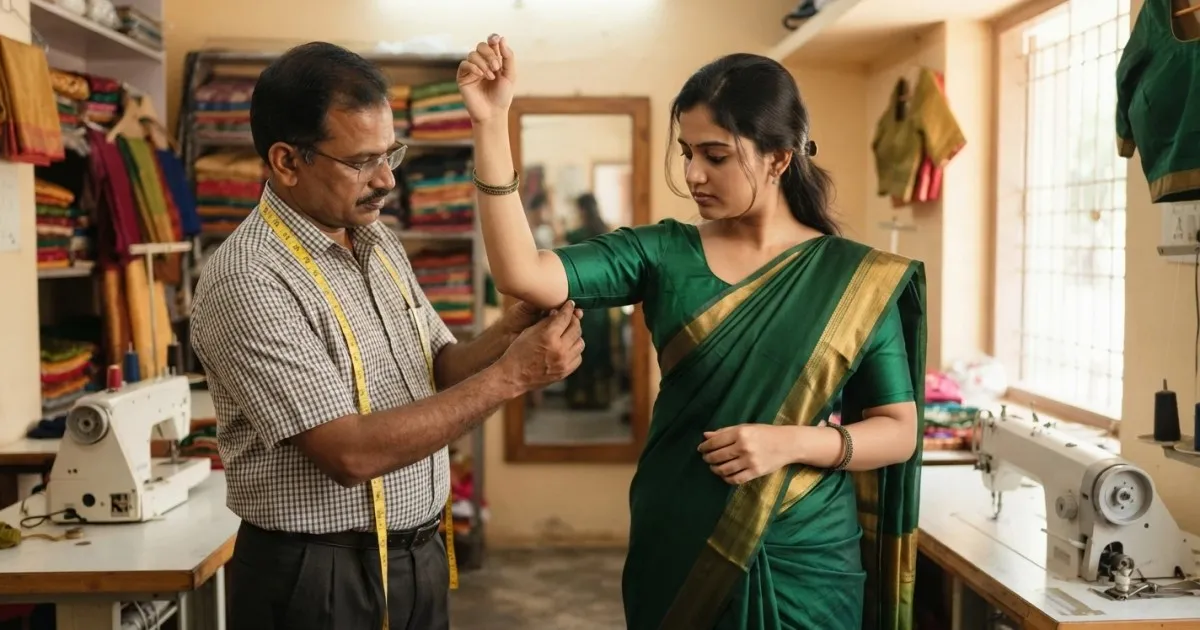
Tailor checking the sleeve and armhole as the customer raises her arm at a trial fitting
A customer tries on a new blouse. Standing still in front of the mirror, it looks perfect. Then she raises her arm to adjust her hair, and the whole blouse lifts with it, the sleeve cuts into her arm and the side seam pulls.
Nothing is wrong with the bust, waist or length. The problem is the shape of two curves – the armhole on the bodice and the cap on the sleeve – and how they were joined.
A sleeve is the only part of a blouse that has to fit a joint that moves in every direction. That is why it is where most fit problems show up.
In this guide you will find:
Why sleeves cause so many complaints
The parts of a sleeve and armhole
How to match the sleeve cap to the armhole
How cap height changes the look and the movement
Why notches matter when setting a sleeve
Common sleeve problems and how to fix them
Why Sleeves Cause So Many Complaints
Four reasons, and each one shows the moment the customer moves.
Two Curves Have to Match
The sleeve cap is sewn into the armhole. If the cap is much longer, the head puckers; if it is shorter, the armhole stretches and the sleeve pulls. Neither shows on the measurement sheet.
Armhole Depth Is Often Guessed
Armhole depth is rarely measured directly. When it is guessed from the bust, a deep armhole lifts the whole blouse when the arm moves, and a shallow one cuts in.
Customers Move
A trial fitting usually happens standing still. The complaint arrives later, when she raises her arm at a function, drives or carries a child.
Sleeves Are Set by Eye
Without clear notches, the tailor setting the sleeve has to guess where the front and back are. A small twist when setting it becomes a sleeve that pulls forward or backward all day.
The Parts of a Sleeve and Armhole
Five measurements decide how a sleeve fits:
Armhole depth – how far the armhole drops below the shoulder. Too deep restricts movement; too shallow cuts in.
Armhole round – the length of the armhole curve, front and back together.
Sleeve cap (head) height – from the top of the cap down to the line across the widest part of the sleeve.
Cap curve length – the length of the sleeve cap’s curved edge, which is sewn into the armhole.
Bicep (upper arm) width – the width of the sleeve at its widest point, plus ease.
Armhole round and upper arm are part of every blouse measurement sheet, covered in our blouse cutting measurement chart.
Matching the Sleeve Cap to the Armhole
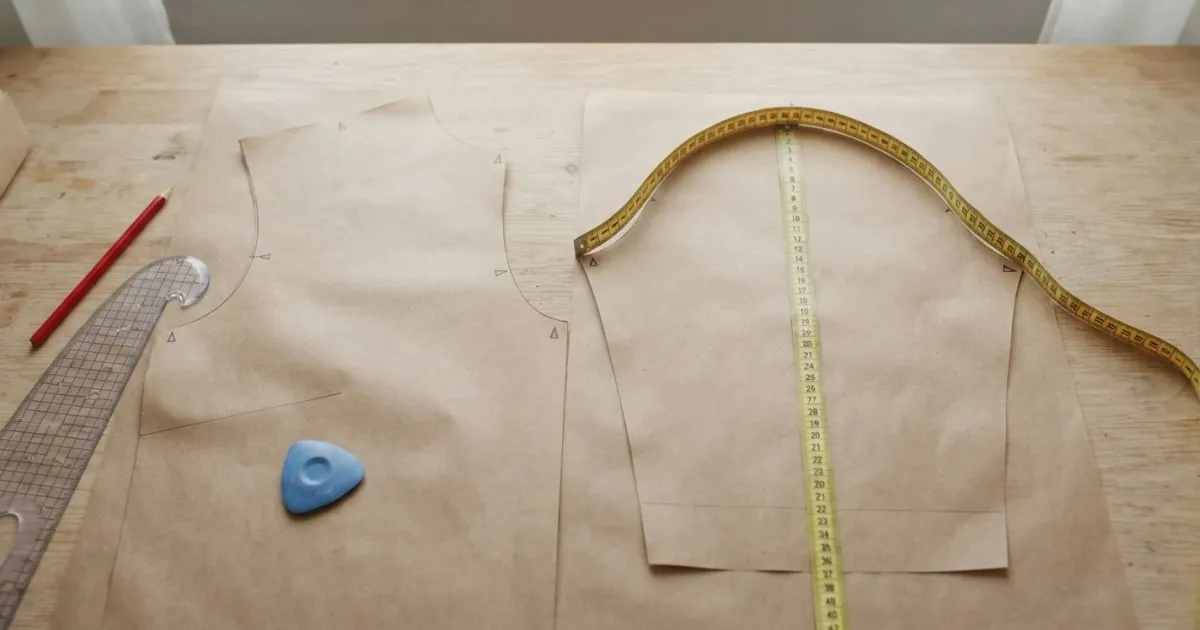
Sleeve cap measured with a tape beside the bodice armhole, with matching notches marked on both
The rule is simple: measure both curves along the stitching line, not the cut edge, and compare them. The figures below use letters, so the method is clear. Use your own measurements.
Line | Example | Where it comes from |
|---|
Front armhole curve | F | Measured along the stitching line, with a tape on its edge |
Back armhole curve | B | Measured the same way |
Total armhole | F + B | What the sleeve has to fit into |
Sleeve cap curve | C | Measured along the cap’s stitching line |
Sleeve ease | C − (F + B) | Usually a small positive amount |
If ease is too large | Reduce cap height or width | Too much ease puckers at the head |
If ease is negative | Raise or widen the cap | A short cap stretches the armhole and pulls |
A small amount of sleeve ease lets the cap sit smoothly over the top of the shoulder. Fitted blouse sleeves in fine fabrics usually need less; sleeves in firm cotton or with a rounded head can take a little more. Measure every new sleeve pattern this way at least once – the numbers rarely match by accident.
Cap Height and Movement
Cap height is a trade-off between how the sleeve looks and how freely the arm moves:
Cap | Look | Movement | Suits |
|---|
High cap, narrow sleeve | Neat, smooth, close to the arm | Restricted when the arm is raised | Formal blouses, fitted silk sleeves |
Medium cap | Balanced | Comfortable for everyday movement | Most blouses and kurtis |
Low cap, wider sleeve | Relaxed, slightly folded under the arm | Free – the arm lifts easily | Daily wear, working customers, kurtas |
Ask how the customer will use the garment. A bride standing for photographs and a teacher writing on a board need different sleeves, even with identical measurements.
Sleeve styles themselves – puff, cap, elbow, bell – are covered in our guide to blouse sleeve designs. Each one still starts from a cap that matches the armhole.
Notches: Setting the Sleeve Straight
Notches are small marks on the stitching line that tell the tailor which points join:
A front notch on the armhole and the matching front notch on the sleeve cap.
Two back notches, so front and back can never be confused.
A shoulder notch at the top of the cap, matched to the shoulder seam.
Underarm points matched at the side seam.
With notches, every tailor in the shop sets the sleeve the same way. Without them, a sleeve can be set a little forward or back, and it will twist on the arm.
Common Sleeve Problems and Fixes
The symptom usually points to the cause:
Symptom | Likely cause | Fix |
|---|
Tight under the arm | Armhole too shallow, or bicep too narrow | Lower the armhole slightly and widen the sleeve at the bicep |
Whole blouse lifts when the arm is raised | Armhole too deep, or cap too high | Raise the underarm point; lower the cap for more movement |
Puckers at the sleeve head | Too much sleeve ease | Reduce cap height or width so the curves match more closely |
Sleeve pulls and the armhole stretches | Cap curve shorter than the armhole | Raise or widen the cap |
Sleeve twists forward or back | Set without notches, or notches mismatched | Re-set the sleeve using front and back notches |
Gape at the front armhole | Armhole too big in front, or not enough side shaping | Reshape the front armhole; check the side dart |
How much of a finished sleeve can be corrected later is covered in our garment alteration guide for tailors.
Sleeves in CAD
In tailoring CAD software, the armhole is drafted from the customer’s measurements and the sleeve cap is drafted to match it, with the shop’s sleeve ease applied. Both curve lengths are measured automatically, so the cap and armhole agree before anything is cut.
Front, back and shoulder notches are placed on both pieces, and they print or plot exactly where they belong. Different sleeve styles and cap heights for blouses are covered on the blouse pattern making software page.
Questions Tailors Ask
Why is my blouse tight under the arm?
Usually the armhole is too shallow or the sleeve is too narrow at the bicep. Check both measurements and add a little ease at the upper arm.
Why does the blouse lift when the customer raises her arm?
The armhole is often too deep or the sleeve cap too high. A slightly higher armhole and a lower cap give more freedom to move.
How much longer should the sleeve cap be than the armhole?
Only a little. Measure both along the stitching line. A small amount of sleeve ease lets the cap sit smoothly; too much puckers the head.
Why does my sleeve twist?
It was probably set slightly forward or back. Use front and back notches on both the sleeve and the armhole, and match them when setting the sleeve.
What sleeve cap height should I use?
Higher for a neat, formal look; lower for daily wear and easy movement. Ask how the customer will wear the garment before choosing.
Can CAD software match the sleeve to the armhole automatically?
Yes. CAD drafts the sleeve cap to fit the armhole, measures both curves, applies the shop’s sleeve ease and places matching notches on both pieces.
Sleeves That Move With the Customer
A sleeve that looks right standing still and feels right in movement is one of the clearest signs of skilled cutting. The quickest way to see an armhole and sleeve cap drafted to match is to watch one drawn from measurements you brought yourself.
Book a free demo – on-site or online, in your language, with no commitment.