How to Start a Tailoring Business with CAD in 2026
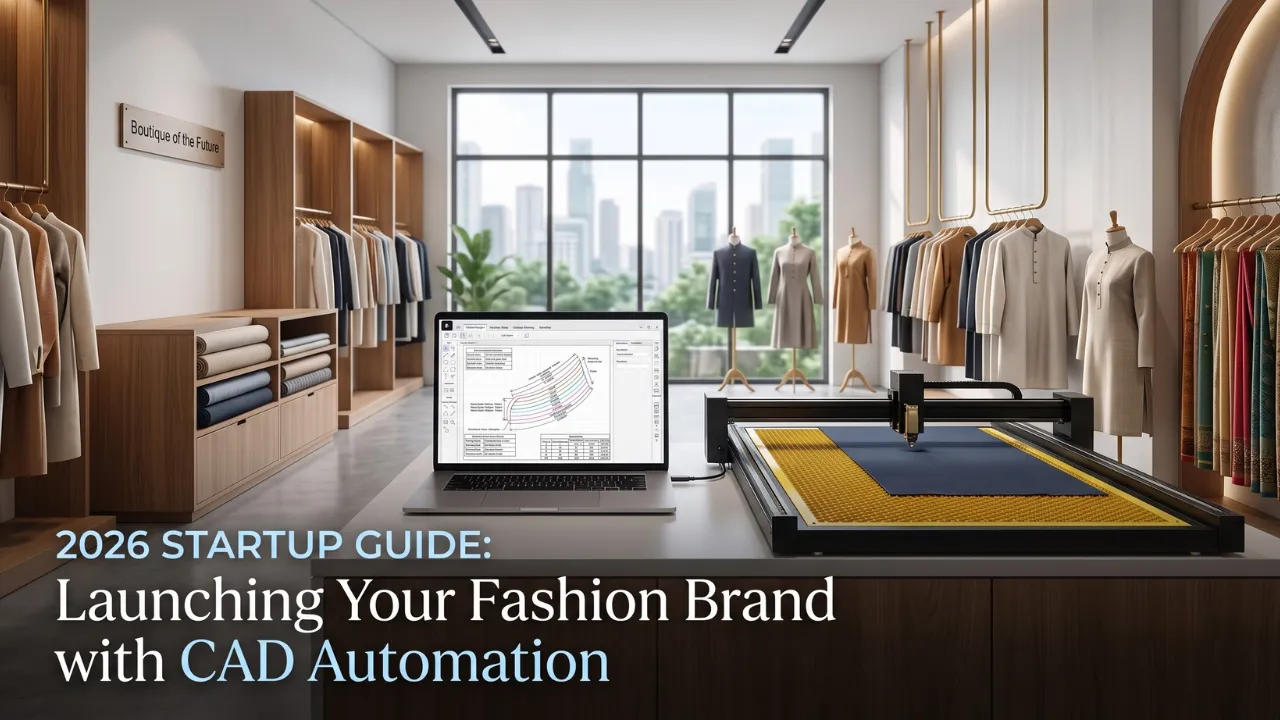
Starting a custom tailoring business or designer clothing boutique in 2026 is faster, more accessible, and vastly more secure than ever before. Historically, the single highest operational barrier to entry in the garment industry was the heavy dependence on a traditional, highly trained 'Master Cutter'. If your head cutter fell ill, miscalculated an expensive piece of silk fabric, or unexpectedly left your business during a peak wedding season, your entire production workshop came to a grinding halt.
Most growing shops move these records into tailoring shop software so the whole team works from the same information.
By introducing contemporary Computer-Aided Design (CAD) software and automated cutting machinery into your initial startup strategy, that absolute bottleneck is completely eliminated. Even a compact, home-based workspace or decentralized start-up can deliver industrial-level, master-quality blouses, kurtis, and chudidhars from day one with flawless precision. Here is a highly practical, step-by-step business guide to launching a hyper-profitable digital tailoring brand this year.
Step 1 — Decide Your Core Production Focus
The quickest way to burn through your initial startup capital is attempting to stitch every type of garment simultaneously. Instead, modern market entry strategies dictate dominating a specialized high-margin niche before expanding. Pinpoint your baseline focus: high-end bridal maggam blouses, corporate kurtis, custom salwar suits, or luxury children's festive wear. A clear, hyper-targeted niche dramatically simplifies your early marketing, equipment configuration choices, and wholesale textile procurement, making customer acquisition completely straightforward.
Step 2 — Identify the Skills You Actually Need
While your business will absolutely require clean stitching, precise overlocking, and impeccable pressing/finishing skills, you no longer need to spend years memorizing manual drawing math or pattern-grading equations. Tailoring CAD platforms handle the layout math entirely. Your startup team simply needs the fundamental operational training to navigate a digital interface, type in a client's measurements, and execute standard sewing assemblies. The tech democratizes master-level cutting skill overnight.
Step 3 — Establish Your Core Setup: Software + Machine
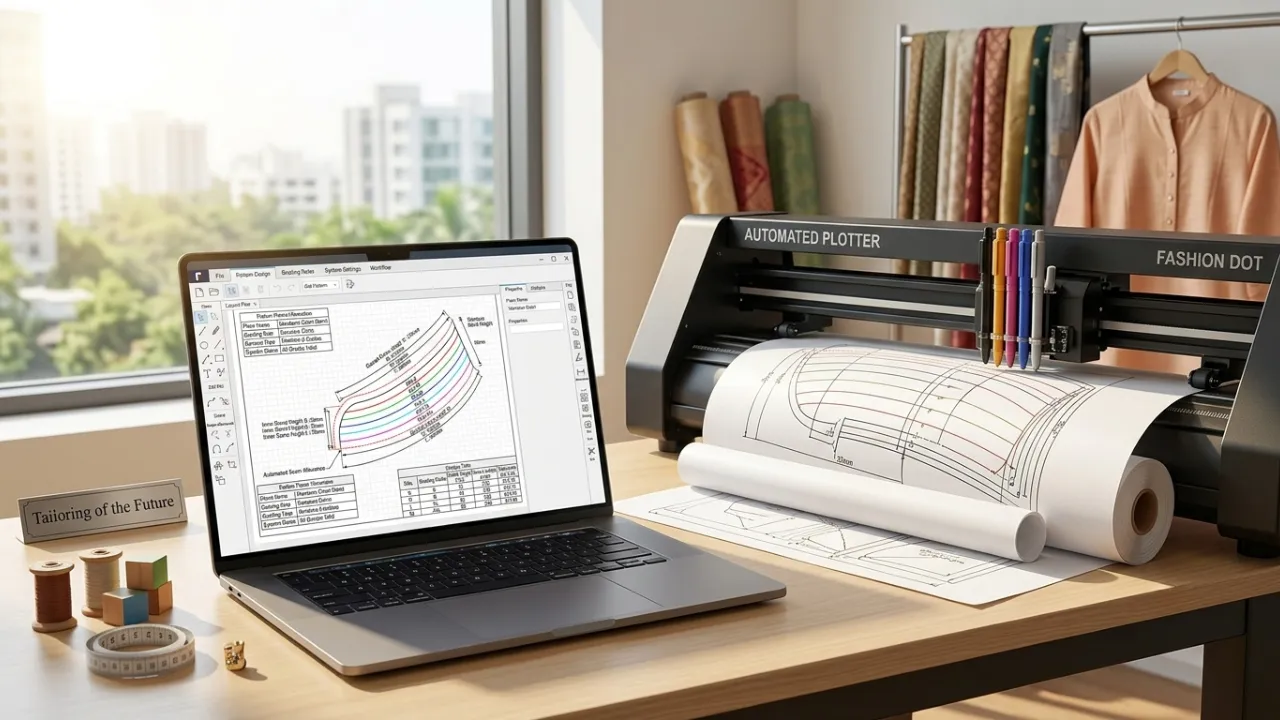
The engine of your modern workshop is your digital fabrication hub. Instead of an expansive, old-school cutting table littered with pencils and newsprint blocks, you need a streamlined digital infrastructure. Invest in industrial pattern making software paired with a synchronized automated cutter. If you are starting on a strict, conservative budget, begin with a pattern inkjet plotter that prints scaled marker stencils onto paper rolls. If you intend to target high-volume bridal orders or premium silk workwear directly, invest in an automated flatbed CO2 laser cutting system to slice directly through raw fabrics while automatically sealing edges cleanly to prevent fraying. This foundation ensures perfect fit consistency independent of human labor variations.
Step 4 — Understand Your Budget & Operational Payback
Your primary capitalization parameters will include the software license, the digital pattern cutter or plotter, high-speed sewing assemblies, and basic workspace utilities. Traditional tailoring setups suffer heavy cash-flow drain through fabric wastage and repetitive manual re-drafting mistakes. Because a CAD system utilizes algorithmic nesting to pack pattern pieces tightly onto fabric, it automatically lowers your textile scrap rates by up to 15%. This immediate material saving, coupled with the ability to clear daily workloads up to ten times faster, ensures a modern automated setup amortizes its own startup cost significantly faster than a traditional hand-cut shop.
Step 5 — Win Customers with Digital Design Galleries
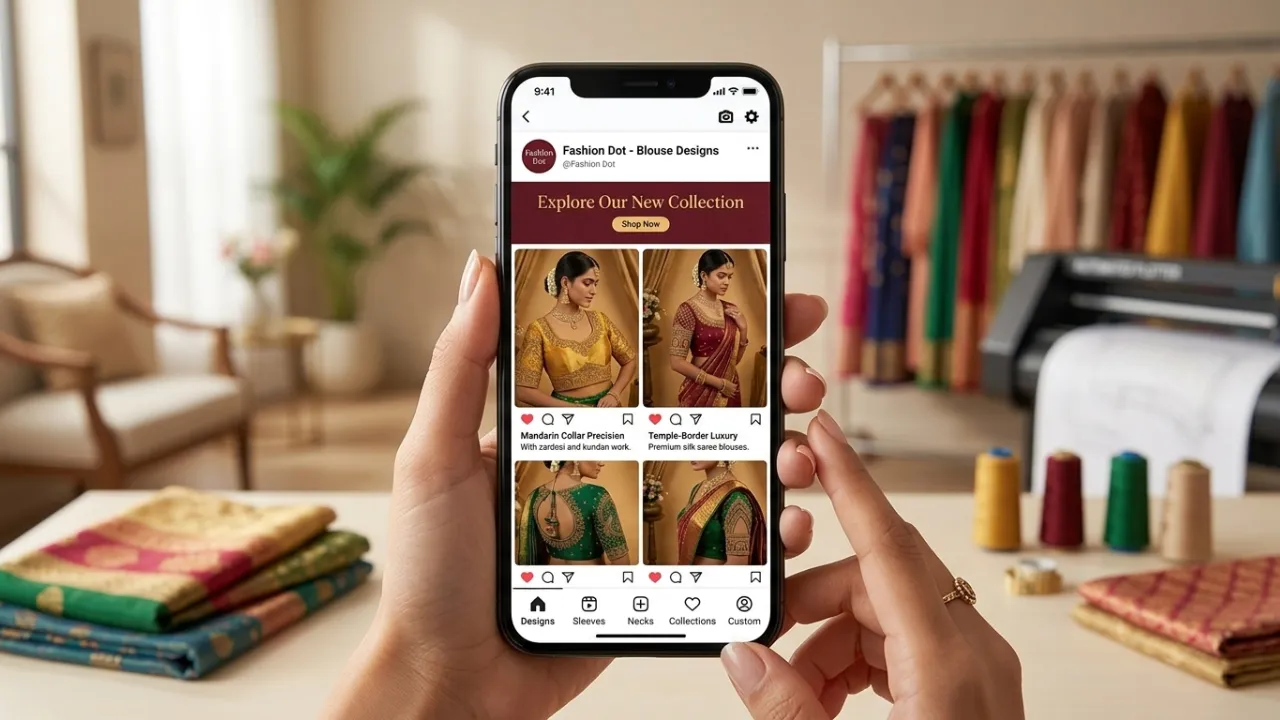
In 2026, a startup's digital storefront is vastly more powerful than a physical main-street retail location. Build an expansive, digitized design catalog—showcasing your available blouse backs, kurti necklines, and sleeve pairs. Share these organized visual galleries directly across business communication channels like WhatsApp Business and Instagram. When prospective clients discover that you use precise digital grading, you can confidently guarantee two major value promises that traditional hand-shearing shops cannot safely keep: unshakeable custom fit repeatability across future re-orders and rapid, reliable delivery timelines.
Launch Safely with the Proven Fashion Dot System
You do not have to navigate the operational risks of starting a new clothing company via trial and error. Fashion Dot is India's pioneer in ethnic apparel engineering, having successfully trained over 1 Lakh custom operators and modernized more than 10,000+ custom tailoring centers, boutiques, and large-scale manufacturing houses across the country since 2003. We don't just ship boxes of machinery; we deliver a complete, turn-key business integration ecosystem—supplying proprietary CAD pattern software, high-speed plotters, digital projectors, and advanced flatbed laser cutters.
Our investment is backed entirely by ongoing technical security, provided through our **5 fully-equipped direct service branches** across India. Our expert engineers provide complete, on-site personnel coaching, operational setup advice, and comprehensive regional language training programs to ensure your startup reaches high-volume profitability safely.
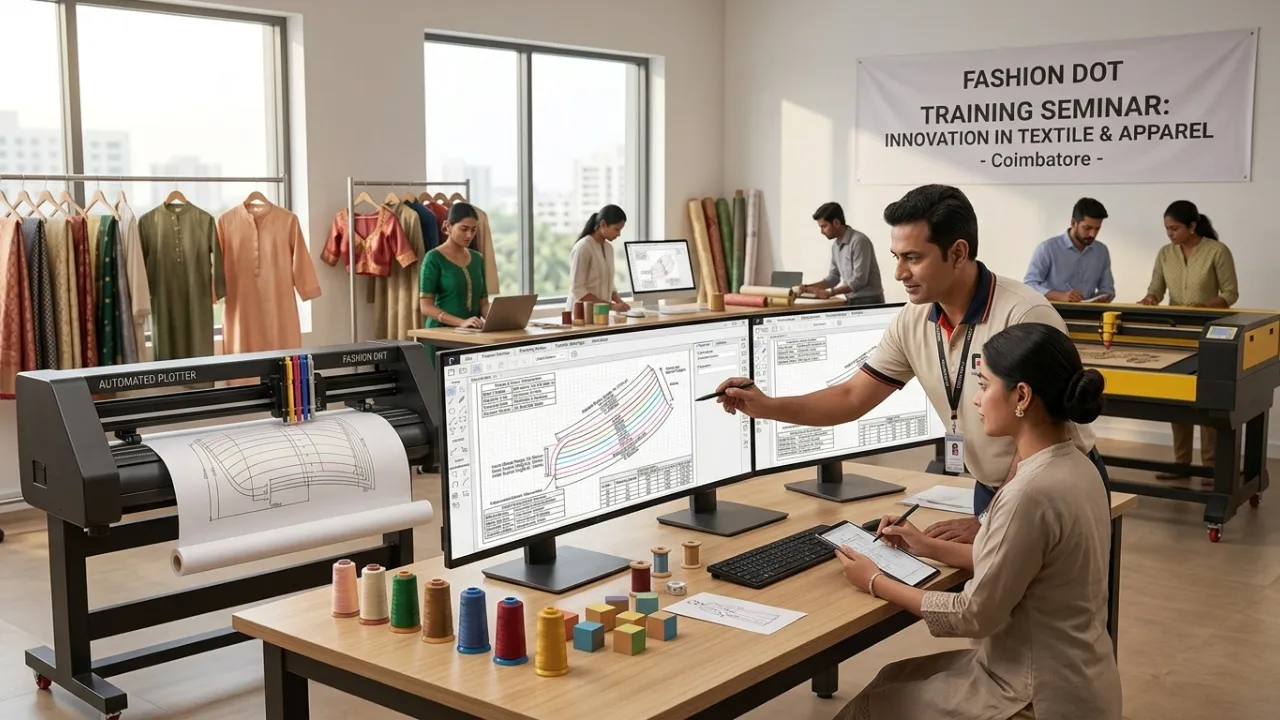
A CAD-based cutting master alternative means the shop keeps cutting even when the master is on leave.
Secure Your Free Live Business Consultation Today
Ready to step directly past outdated, labor-dependent production methods and launch a high-yielding, modern tailoring enterprise? Let our specialized consultation team map out your available production space, evaluate your target region's fabric niche, and design the ultimate hardware-and-software blueprint engineered for your specific budget goals.
Take complete ownership of your custom fitting standards, optimize your workshop speed, and scale your brand securely from day one.
👉 Schedule Your Free Live Technical System Demo & Consultation Now