Tailoring CAD Software vs Manual Cutting: Which Wins in 2026?
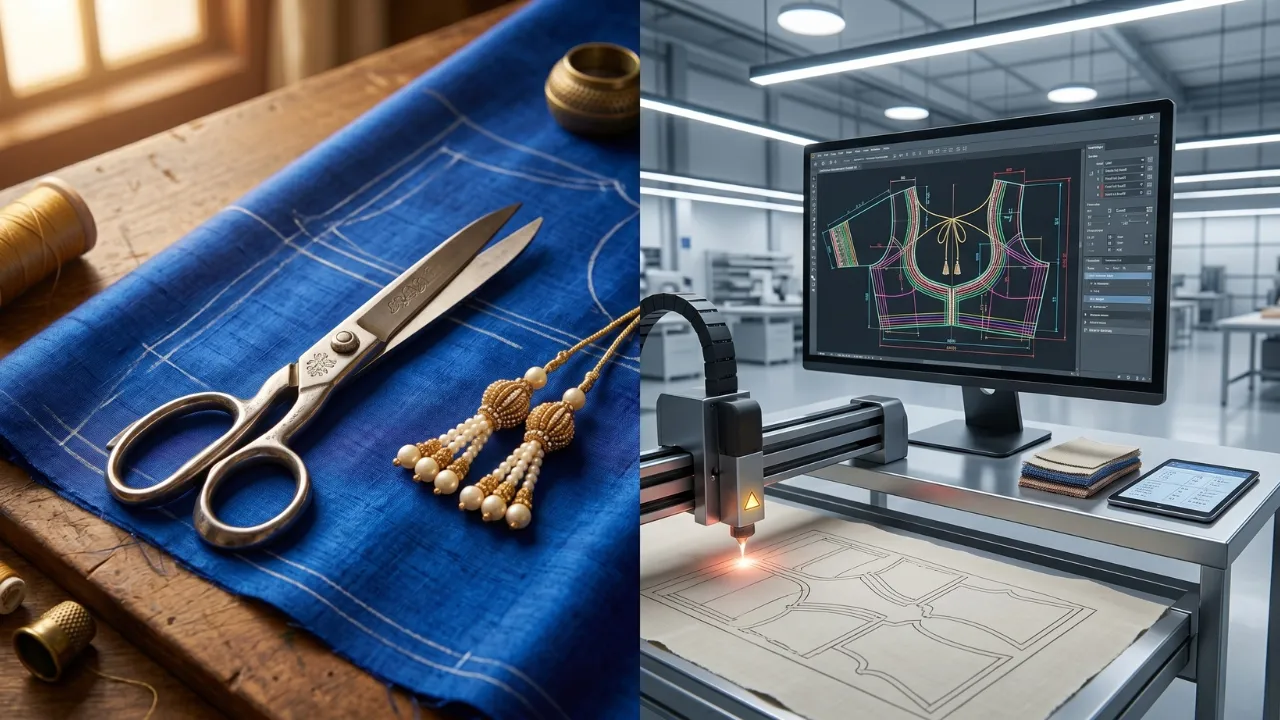
Every tailor faces the same daily decision at the cutting table: trust the hand and the shears, or trust the technology. For generations, the master tailor’s steady hand has been the bedrock of custom apparel. However, as we navigate 2026, the retail landscape in India has reached unprecedented speeds. Customer expectations are soaring, turnaround times have shrunk, and fabric costs continue to climb.
While traditional techniques produce beautiful garments, the operational gap between manual cutting and digital solutions is widening. To help boutique owners and independent tailors make an informed choice, here is an honest, head-to-head comparison.
1. Speed and Production Throughput
Traditional methods are heavily dependent on a master tailor's physical energy. Marking and hand-cutting a complex design can consume 30 to 45 minutes of labor. As fatigue sets in, production slows.
Conversely, tailoring CAD software transforms this into a near-instantaneous process. By utilizing pattern making software, tailors can grade and arrange patterns for multiple sizes in seconds. When paired with automated machinery, the actual fabric cutting takes only 1 to 2 minutes, allowing one operator to handle triple the volume of a traditional team.
2. Fabric Waste and Cost Minimization
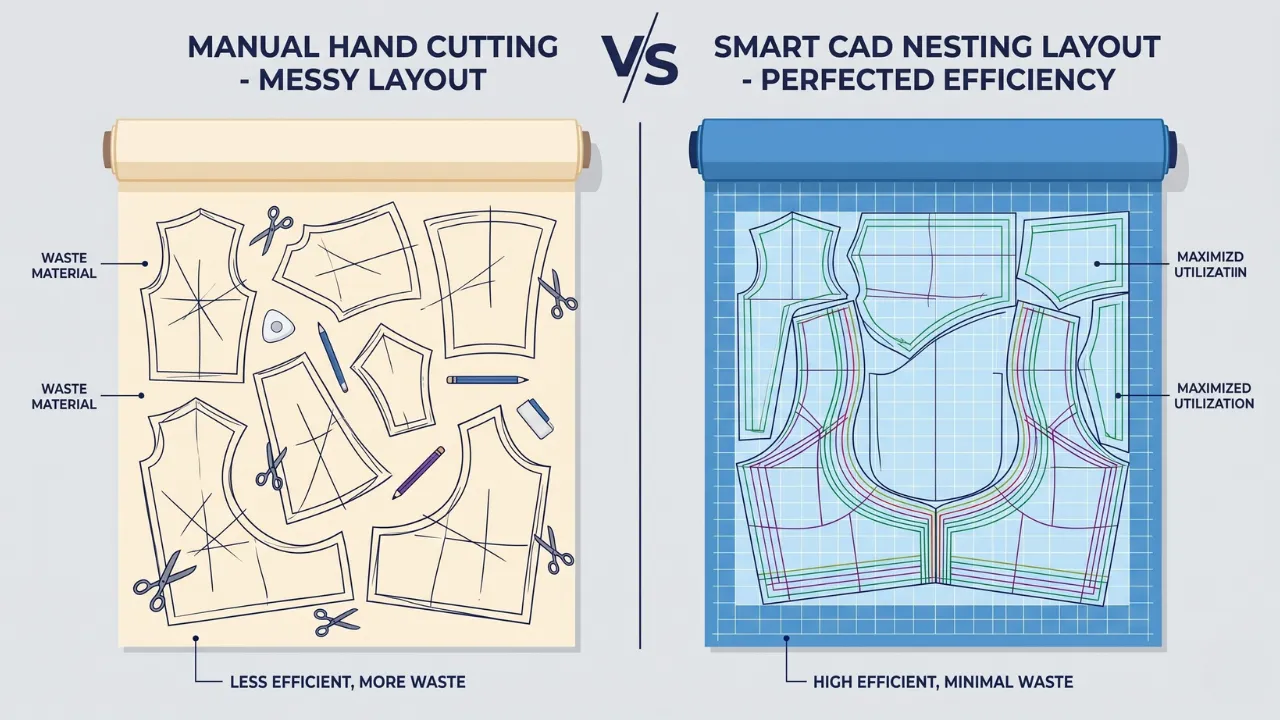
Hand marking patterns often results in human error. When working with expensive textiles like Banarasi silk or Kanjeevaram brocades, one wrong cut can ruin the entire panel.
Fashion Dot systems mitigate this via automated marker optimization. By nesting pattern pieces like a puzzle, the software utilizes every square millimeter of fabric. This efficiency typically results in a 10% to 20% reduction in waste, meaning your material savings often pay for the tailoring software within months.
3. Fit Consistency and Customer Retention
A hand-cut garment often varies based on the tailor’s daily workflow. Minor micro-variations mean a customer might receive a slightly different fit on repeat orders, leading to costly re-alterations.
Modern tailoring CAD software ensures mathematical precision. Once a client's measurements are stored, the digital pattern updates perfectly every time. This consistency builds brand loyalty and eliminates the overhead of fixing ill-fitting clothes.

4. Reducing Dependency on a Single Master
The biggest hidden risk for any shop in the Indian tailoring sector is being entirely dependent on one specialized cutter. If that master leaves or falls ill, your production stalls.
Transitioning to boutique software like Fashion Dot de-risks your business. The system handles complex grading and seam allowances, allowing junior staff members to generate master-quality results. Your operations become scalable and immune to sudden staffing changes.
The Final Verdict
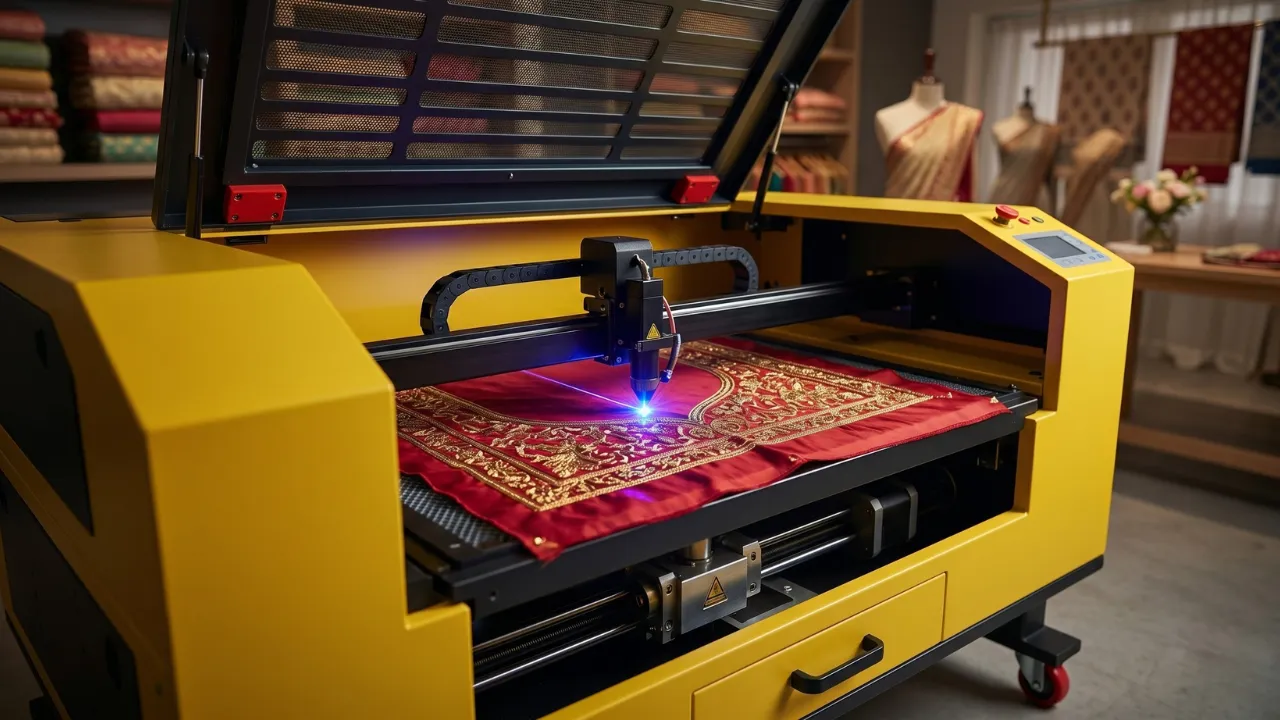
Manual methods will always hold value for heritage, one-off couture. However, for any business prioritizing consistent volume, error-free scaling, and cost protection, digital systems are the clear winner in 2026. Join the 10,000+ professionals who have upgraded their workshops and secured their future with Fashion Dot.
The Cost Comparison Over Three Years
Manual cutting looks free because nothing is invoiced. The cost is real, it is just spread across wasted cloth and re-stitching.
| Where the money goes | Manual cutting | CAD drafting |
|---|
| Software and printer | None | One-time or plan based |
| Fabric lost to marking by eye | Continuous | Typically 5–15% less |
| Re-cutting after a bad fit | Cloth plus labour, every time | Rare once measurements are stored |
| Time to draft a standard garment | 40–60 minutes | Minutes |
| Dependence on one master cutter | Total | Shared across staff |
| Training a new cutter | Months | Days of measuring practice |
The figure that decides it is not the licence cost. It is how many garments a shop re-cuts in a month, and how much of the shop stops when one person is on leave.
What Manual Cutting Still Does Better
An honest comparison has to admit where the hand still wins:
- One-off couture. A design being invented at the table is faster in chalk than on screen.
- Very small volumes. Two or three garments a week does not justify the printer.
- Unusual bodies. An experienced master reads a posture in a way no measurement sheet captures — though the adjustment can then be saved as a pattern.
- Immediate alterations. Taking in a finished garment stays a hand job.
The realistic answer for most shops is not one or the other. It is CAD for the standard and repeat work, which is the bulk of the order book, and the hand for the exceptions.
Signs a Shop Has Outgrown Manual Cutting
- More than one person cuts, and the same customer gets a different fit depending on who is in.
- Orders are turned away in season because drafting is the bottleneck.
- Regular customers ask why the second garment does not fit like the first.
- Cloth is being re-cut often enough that nobody counts it any more.
- The shop cannot take a bulk or uniform order because the drafting time does not scale.
Frequently Asked Questions
Is CAD cutting accurate enough for silk?
More accurate than hand marking, because the pattern is identical every time and the layout is placed by the software rather than by eye.
Will my cutting master lose his job?
In practice he stops re-drawing the same standard patterns and moves onto fitting, finishing and the difficult orders, which is where his experience actually earns.
What if the computer fails?
Patterns are stored and can be reprinted. A hand-drawn pattern that is misplaced is gone.
How much fabric does it really save?
Shops typically report 5 to 15 percent against hand marking, and the saving is largest on expensive cloth where the pieces have to be placed carefully.
Can I start with one garment type?
Yes. Most shops begin with the garment they cut most often and add modules once the staff are comfortable.
Book a free demo and cut one of your own difficult garments both ways before you decide.