A lehenga is the most expensive garment most boutiques cut, and the one where a cutting mistake costs the most. This lehenga cutting guide covers the measurements a ghagra is drafted from, how the flare and the number of kalis are decided, how much cloth each option really needs, and what the lining and cancan change.
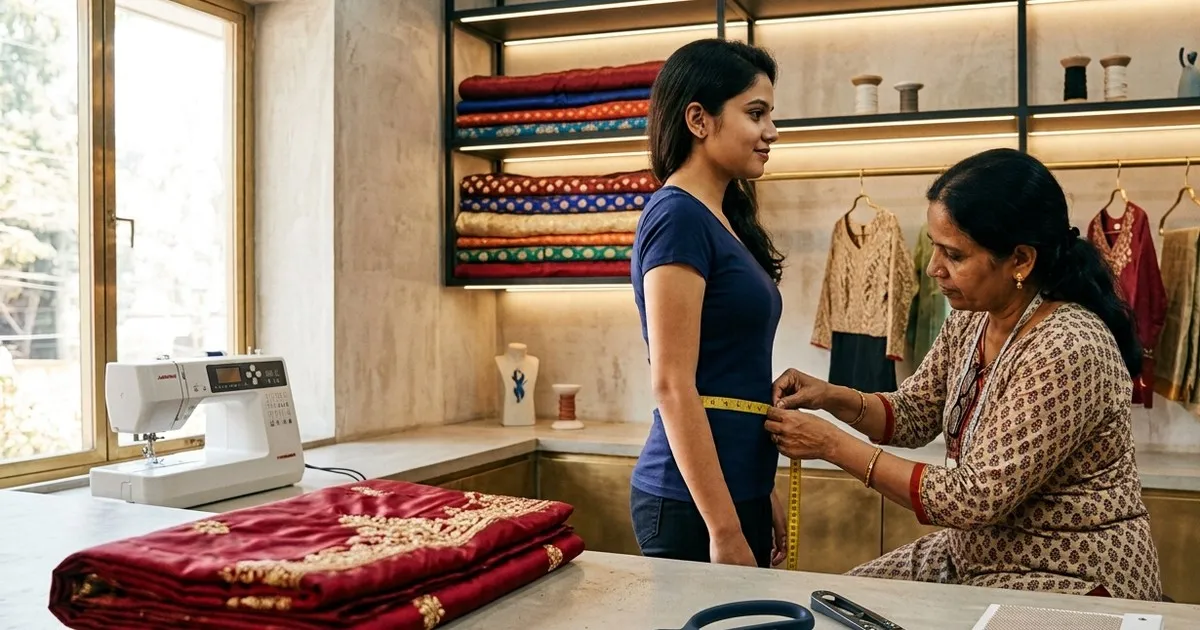
Boutique tailor measuring a customer at the waist for a lehenga with heavy embroidered fabric on the table
A customer orders a lehenga for a wedding. The cloth is bought, the kalis are cut, and halfway through the lay the shop realises the flare asked for will not come out of the length of fabric on the table.
Now there are three choices, and none of them is good: reduce the flare and disappoint her, buy more of a fabric that may not match the same dye lot, or absorb the cost.
That decision was made hours earlier, at the point where the flare and the kali count were chosen without calculating the cloth. On a blouse an error costs a metre. On a lehenga it can cost more than the stitching charge for the whole outfit.
In this guide you will find:
The measurements a lehenga or ghagra is cut from
How flare, kali count and cloth requirement are connected
Panelled, circular and A-line — what each costs in fabric
What the lining and the cancan add
The four mistakes that ruin a lehenga order
How the same draft is reused for the next customer
The Measurements a Lehenga Is Cut From
Fewer than a blouse, but each one carries more cloth behind it. Take them over a fitted garment, and take the length with the customer in the footwear she will wear.
# | Measurement | Where it is taken | Note |
|---|
1 | Waist | Where the lehenga will actually sit, not the natural waist | Ask her: waist or below? |
2 | Hip | Fullest part of the hip | Decides the yoke depth |
3 | Lehenga length | From the chosen waist line to the floor, in her heels | The single most common error |
4 | Yoke depth | Waist down to where the flare begins | Usually 6-9 inches |
5 | Flare (ghera) | The finished sweep at the hem | A choice, not a body measurement |
6 | Choli measurements | As for any fitted blouse | Taken separately |
7 | Dupatta length | As ordered | Often forgotten in the cloth calculation |
Write the footwear on the order sheet. A lehenga measured in flat sandals and worn with three-inch heels is a lehenga that sweeps the floor.
Flare, Kalis and Cloth: How They Are Connected
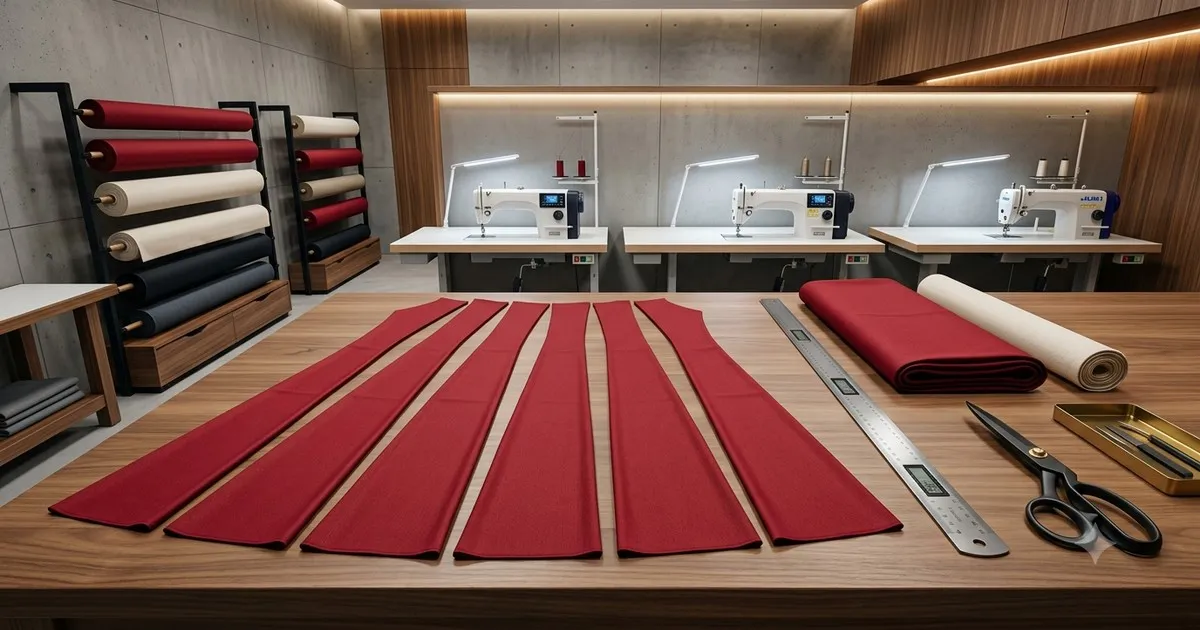
Lehenga kali panels cut from silk laid out in a fan on a boutique cutting table
This is the part that decides both the look and the bill, and it is one calculation:
<strong>Flare (ghera)</strong> is the total sweep at the hem — what the customer sees when she turns.
<strong>Kalis</strong> are the tapered panels that produce it. More kalis means a smoother flare and more seams.
<strong>Cloth</strong> follows from both. Each kali is roughly the lehenga length plus seam and hem allowance.
The working rule is simple: cloth needed is approximately the number of kalis multiplied by the length plus allowance, adjusted for how many kalis fit across the fabric width. Narrow fabric means fewer kalis per width and more metres.
Style | Typical kalis | Flare | Cloth appetite |
|---|
A-line | 4-6 | Modest, falls straight | Lowest |
Panelled (kali) lehenga | 8-12 | Full, controlled | Moderate |
Heavy panelled | 16-24 | Very full, smooth sweep | High |
Semi-circular | cut as a half circle | Full without seams | High, and needs wide fabric |
Full circular | cut as a circle | Maximum sweep | Highest; often impossible on narrow cloth |
Mermaid / fishtail | 6-8, shaped | Flare only below the knee | Low to moderate |
Decide the style before buying cloth, not after. A customer who says "full flare" and a shop that buys for an A-line have already lost the order.
Fabric: What Each One Does to the Flare
The same draft behaves differently in different cloth. A flare that hangs beautifully in georgette stands out stiffly in raw silk, and a kali count that suits net is wrong for velvet. Decide the fabric and the flare together.
Fabric | How it falls | What to watch |
|---|
Georgette or chiffon | Soft, fluid, falls close | Needs more kalis or a cancan to show flare |
Raw silk or dupion | Holds its shape, stands away | Flare reads fuller than drafted |
Velvet | Heavy, falls straight down | Weight pulls the waistband; the belt must be firm |
Net | No body of its own | Always needs lining and usually a cancan |
Brocade | Stiff, holds a strong flare | Motif direction matters on every kali |
Satin | Smooth, shows every seam | Fewer, cleaner kalis look better than many |
Heavily embroidered fabric is a category of its own. The work adds weight the draft did not account for, and the hem drops after a few hours of wear. On bridal orders, hang the finished skirt overnight before the final hem is decided.
Lehenga Cutting for Different Body Types
The measurements are the same for everyone. What changes is where the flare begins and how deep the yoke sits.
Fuller hip — a deeper yoke, with the flare starting below the widest point, sits better than a flare that begins at the waist.
Shorter height — fewer, wider kalis. Sixteen narrow panels on a short lehenga chop the line and make the wearer look shorter.
Taller customer — more kalis carry the extra length without the panels looking wide and empty.
Slimmer frame — a full flare adds the volume a straight A-line will not.
None of this is a different draft. It is the same lehenga cutting draft with the yoke depth and the kali count chosen deliberately instead of by habit.
What the Lining and Cancan Add
The outer fabric is not the whole requirement, and this is where most lehenga quotations go wrong:
Layer | What it does | Cloth effect |
|---|
Lining (inner) | Gives body and opacity | Roughly the same panel count as the outer |
Cancan / net petticoat | Holds the flare out | Its own layers, often several |
Canvas or buckram at the hem | Stops the hem collapsing | A narrow strip, all the way round |
Waistband and belt | Takes the weight of the skirt | Small, but must be firm |
Dupatta | Ordered with the set | Its own length, plus border work |
Quote the set, not the skirt. A lehenga priced on the outer fabric alone is priced at a loss before a single kali is cut.
Four Mistakes That Ruin a Lehenga Order
1. Length Taken Without the Footwear
Three inches of heel is three inches of lehenga. Ask what she will wear, and if she does not know, take the length to the ankle bone and note it.
2. Flare Promised Before the Cloth Is Calculated
Agree the style, count the kalis, calculate the cloth, then confirm the flare. Doing it in the other order is how shops end up buying a second cut of fabric in a different dye lot.
3. Embroidery Placed After Cutting
On a kali lehenga the motif has to run across the seams correctly. Mark the placement on the pattern, do the work, then cut. A misplaced border on twelve panels cannot be corrected.
4. The Waist Line Assumed
Some customers want it at the natural waist, some well below. It changes the yoke depth and the total length. Ask, and write the answer down.
Reusing the Draft for the Next Customer
A lehenga draft is worth keeping in a way a simple blouse draft is not. The kali shape for a given length and flare does not change between customers — only the waist and the length do.
Store the kali template against the style, not the customer.
Store the customer measurements separately, so a repeat order is a re-scale rather than a redraw.
Keep a note of the cloth actually used. Next time the same style is quoted, that figure is worth more than any calculation.
Hand drafting a sixteen-kali lehenga takes most of a day, and produces a slightly different panel every time. That variation is what shows in the hem when she turns.
Lehenga, gown and dress drafting is covered on the dress pattern making software page.
Ready styles to show a customer are in the pattern gallery.
Questions Boutiques Ask
How many kalis does a lehenga need?
Eight to twelve for a full but manageable flare, sixteen to twenty-four for heavy bridal work. Fewer than six reads as an A-line rather than a lehenga.
How much cloth does a lehenga take?
It depends on the length, the kali count and the fabric width, which is why it has to be calculated per order rather than quoted from a rule of thumb. Work it out before the cloth is bought, not after.
Should the lining match the outer panel count?
Broadly yes. A lining with fewer panels pulls against the outer and the flare sits unevenly.
Can a circular lehenga be cut on narrow fabric?
Not as a true circle. On narrow cloth it has to be pieced, which puts seams where a circular cut was chosen to avoid them. Check the fabric width before promising the style.
Where should the lehenga sit on the waist?
Wherever the customer wants, but it must be asked and recorded. It changes the yoke depth and the overall length together.
Why does the hem look uneven when she turns?
Usually because the kalis were drafted slightly differently from each other, or the lining panel count does not match. Both disappear when the panels come off a stored, identical template.
See a Lehenga Draft Printed Full Size
The quickest way to judge whether a stored draft is worth it is to watch a full kali set drafted and printed from measurements you brought yourself.
Book a free demo and bring a lehenga order you are quoting now. On-site or online, in your language, with no commitment.