Ask any tailoring shop what its most valuable asset is and you will hear machines, or the cutter, or the location. It is usually none of those. It is the customer measurement records - the book that says what every regular customer measures, and it is almost always the least protected thing in the building.
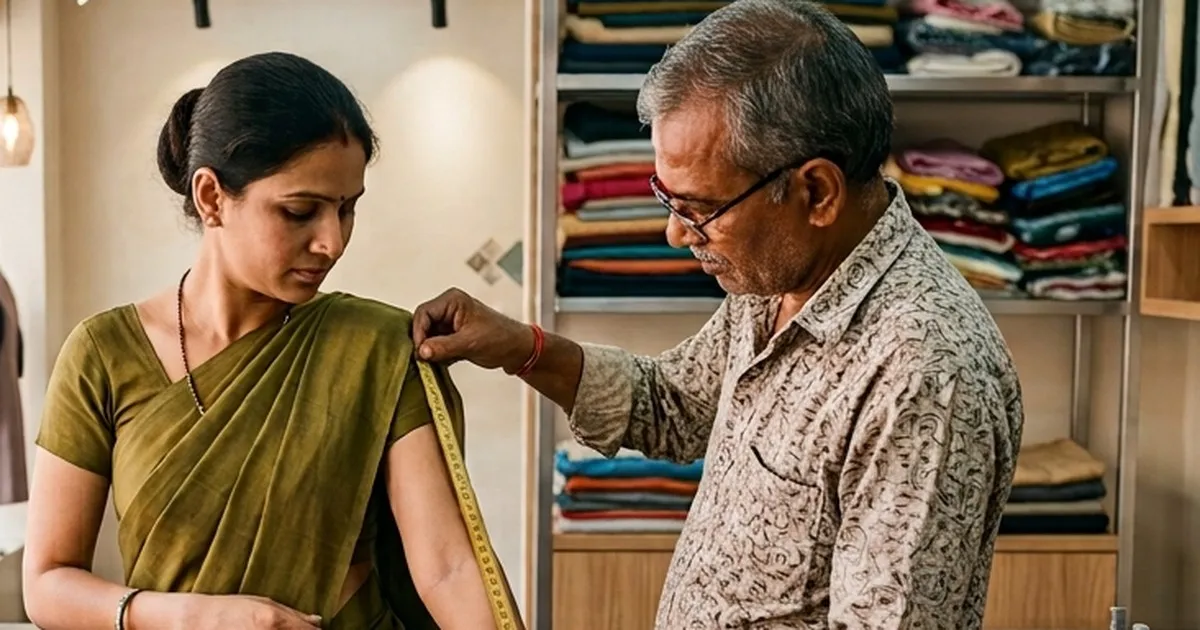
Tailor measuring a customer sleeve length in a tailoring shop
A customer who has been coming for eight years walks in and orders a blouse. She does not expect to be measured again. She expects the shop to know.
That expectation is the whole relationship. It is why she does not go to the newer shop with better lighting two doors down. And it lives entirely in a book that can be lost, soaked, borrowed, or simply written in handwriting nobody else can read.
In this guide you will find:
What a customer measurement record is actually worth to the shop
The five ways records get lost, and which is the most common
What a record should contain beyond the measurements themselves
Paper and digital, compared honestly rather than sold
What to do this month, whichever way you keep them
What the Record Is Actually Worth
It is worth the difference between a customer and a repeat customer, and that gap is larger than it looks:
A repeat customer costs nothing to acquire. The record is the reason she comes back rather than trying somewhere else.
A stored measurement makes a phone order possible. She can order for a function without coming in at all.
It removes the most awkward five minutes in the shop - measuring a regular customer again as if she were new.
It carries the corrections. The second garment fits better than the first because of what was written after the first fitting.
That last one is the part shops undervalue. The measurement taken with a tape is a starting point. What makes a garment fit is the adjustment learned after the trial, and that only exists if someone wrote it down.
The Five Ways Records Get Lost

Shelf of old worn measurement registers stacked in the back of a tailoring shop
# | How it happens | How common |
|---|
1 | The book fills up and the old one is put away, then misplaced | The most common by far |
2 | Water, damp or fire | Rare, total when it happens |
3 | The person who kept it leaves the shop | Common, and often not noticed for months |
4 | Handwriting nobody else can read | Constant, and never counted as a loss |
5 | The customer is there but the entry cannot be found | Weekly in a busy shop |
Number five is worth thinking about, because it does not feel like losing anything. The record exists. It is in the shop. It cannot be found in the two minutes the customer is standing there, so she gets measured again - and now there are two entries for one person, and next time nobody knows which is right.
A record that cannot be found quickly is not a record. It is paper.
What a Record Should Contain
Most books hold only the measurements. The useful ones hold five more things:
What | Why it matters |
|---|
The measurements | Obviously, and with the date they were taken |
The garment they were taken for | A blouse measurement and a kurti measurement are not the same set |
The fit correction after the trial | This is what makes the next garment fit first time |
The fabric used | Because the same measurements behave differently in different cloth |
Any alteration done afterwards | An alteration is the shop telling itself what it got wrong |
The date of the last order | Tells you who has stopped coming, which nothing else does |
Measurements change. A record from four years ago with no date on it is a guess, and a guess used confidently is worse than no record at all.
Paper and Digital, Compared Honestly
Paper is not the enemy. A well kept book beats a badly kept system every time. The difference shows in four specific places:
| Paper register | Kept digitally |
|---|
Speed of finding one customer | Depends on memory and order | Search by name or phone |
Survives losing one book | No | Yes, if it is backed up |
Readable by a new staff member | Only if the handwriting is clear | Yes |
Shows who has stopped coming | Practically never | Yes, by date |
Works when the power is off | Yes | Only on paper or phone backup |
Cost to start | Almost nothing | Has a cost, and it should be stated plainly |
Both of the last two rows are real. A shop that is told digital has no downsides is being sold to. The honest position is that paper is cheaper and always available, and digital is findable, shareable and survivable - and the last of those is what decides it for most shops after they lose a book once.
Keeping customer records alongside orders is part of what the software for tailoring shop page covers.
Taking the Measurement Is Half the Record
A record is only as good as the measurement written into it, and two people taking the same measurement rarely write the same number.
Agree where each measurement is taken and keep it the same for everyone in the shop. Waist at the natural waist for one cutter and below it for another makes the record useless.
Write what the customer was wearing. A measurement taken over a thick kurti and one taken over a fitted top are different numbers for the same person.
Note the ease you added, separately from the body measurement. Mixing the two is why a stored record works for one garment and fails for the next.
Record the footwear for anything floor length.
Photograph-based measuring is covered on the body measurement app page, which is a different way of arriving at the same numbers.
Alterations Are Records, Not Complaints
Most shops treat an alteration as an annoyance to be finished and forgotten. It is the single most useful piece of information the shop will ever get about that customer, and it is thrown away every time it is not written down.
An alteration is a measured correction. Somebody has already worked out exactly how much and where.
The same correction will apply to the next garment for the same customer, in the same fabric weight.
Repeated alterations of the same kind across many customers point at the pattern, not the customers.
A shop that records alterations can tell in a year which garments cost it the most rework.
Write the alteration into the customer record, in the same place as the measurements, on the day it is done. Two lines is enough - what was changed and by how much.
The shops that do this stop having the same conversation with the same customer every year.
The Handwriting Problem Nobody Counts
Every shop has at least one book that only one person can read, and everyone treats it as normal until that person is not there.
It is worth being blunt about what that means. If the owner is away and a customer walks in, either somebody guesses, or she is measured again. Both damage the thing the record existed to protect.
The fix does not require software. Agreed abbreviations, written once on the inside cover, and one rule that a record is written so a second person can read it, removes most of the problem in a week.
What to Do This Month
Whichever way you keep records, four things are worth doing in the next few weeks:
Step | What to do | Why |
|---|
1 | Find every old book and put them in one place | Most shops discover they have more than they thought, and that one is missing |
2 | Photograph every page of the current book | One evening of work, and the fire and water risk is gone |
3 | Agree one way of taking each measurement, in writing | This is free and it is the largest single improvement |
4 | Enter your regular customers first, not everyone | The regulars are where the value is. The rest can be added as they come in |
Step two is the one to do first. It costs an evening and it protects everything else, whatever you decide about the rest.
Questions Shops Ask
How long should old measurements be kept?
Keep them, but date them. An old measurement is useful as history even when it is no longer accurate - it tells you the customer exists and what she used to order. What causes damage is an undated one being treated as current.
Should measurements be taken again for a repeat customer?
Check rather than retake. Confirm two or three key measurements against the record, and take the full set again only if they have moved. That is faster, and it shows the customer that the shop knows her.
What if the customer measurements have changed?
Add a new dated entry rather than writing over the old one. The history is worth keeping, and overwriting is how a shop ends up unable to tell which number is current.
Is a phone gallery good enough as a backup?
It is far better than nothing and it takes one evening. Its limits are that it cannot be searched by name, and it is lost with the phone unless it is also backed up somewhere else.
Who should keep the records?
One named person, with a second person who knows the system. Records kept by whoever is free are the ones that develop two entries for one customer.
Does keeping records digitally mean buying software?
Not necessarily. A phone photograph of every page tonight is a real improvement and costs nothing. Software is worth it when finding a customer quickly, and knowing who has stopped coming, start to matter more than the cost.
Order and billing records are covered separately on the billing software page.
See Your Own Customer Records in One Place
Bring your current register to the demo, and ask to see what one regular customer looks like once the measurements, the garment, the corrections and the order history sit together on one screen.
Book a free demo and bring the book you use today. On-site or online, in your language, with no commitment.