Two tailors take the same measurements from the same customer, and one blouse fits while the other pulls across the arm. The measurements were right both times. What changed was the ease – the extra room added between the body and the garment. This guide explains the two kinds of ease, where ease goes on a garment, typical starting ranges for common Indian garments, how fabric changes the amount, and how to keep ease the same in every order your shop cuts.
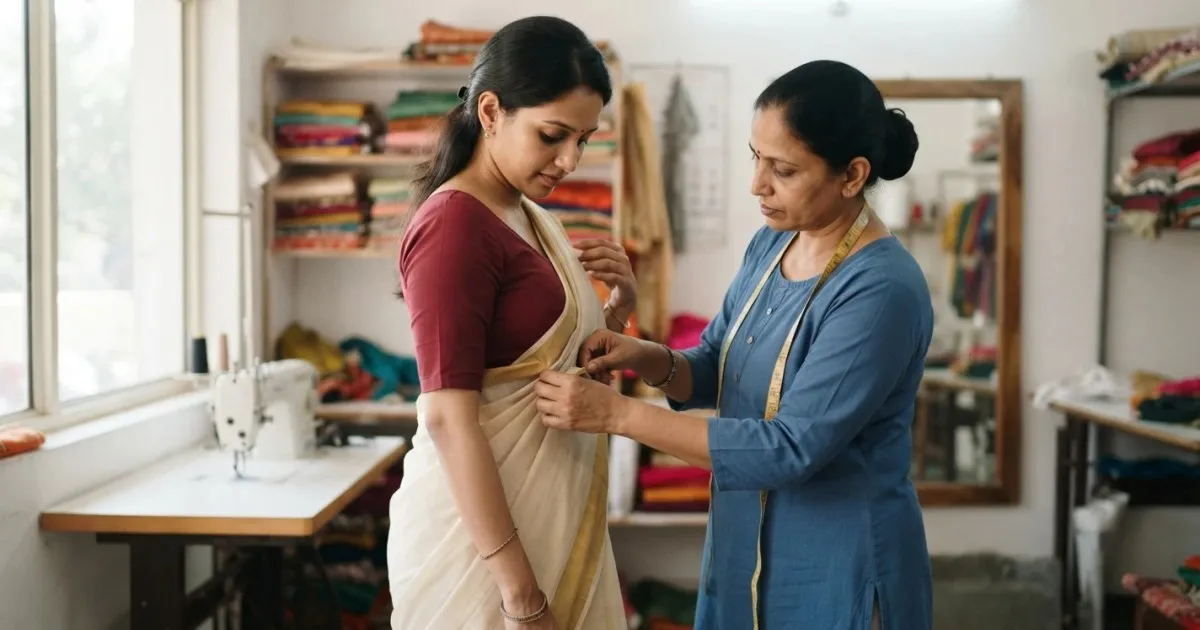
Tailor checking the room at the side of a blouse during a trial fitting
A body measurement is the size of the body. A garment cut to exactly that size cannot be worn – the customer could not breathe, sit, lift her arms or move. Every garment needs some extra room, and how much is one of the most important decisions in tailoring.
Most cutting masters add it by feel. That works while one experienced person does all the cutting. The moment a second person cuts, or the same person is tired, rushed or cutting an unfamiliar fabric, the ease changes – and so does the fit.
Fit complaints are often blamed on measuring. Very often the measurement was fine and the ease was not.
In this guide you will find:
Why ease causes so many fit problems
The difference between wearing ease and design ease
Where ease goes on a garment
Typical starting ranges for blouses, kurtis, shirts and trousers
How fabric changes the ease you need
How to keep ease consistent across your shop
Why Ease Causes So Many Fit Problems
Four reasons, and none of them show up on the measurement sheet.
Ease Is Rarely Written Down
Measurements are recorded for every customer. The ease added to them usually is not. When a garment does not fit, there is no record of what was added, so nobody can tell whether the measurement or the ease was wrong.
Every Cutter Adds a Different Amount
One cutter likes a close fit, another plays it safe with extra room. Both are skilled. Customers notice the difference the first time their regular order is cut by someone new.
The Same Ease Is Used for Every Fabric
Stiff silk, soft cotton and stretch fabric behave very differently on the body. The same ease in all three produces three different fits.
Ease Is Confused With Style
A loose, flowing kurti and a fitted kurti need very different amounts of room. When the style is not agreed clearly, the cutter guesses, and the customer gets a fit she did not expect.
Wearing Ease and Design Ease
There are two kinds of ease, and it helps to keep them separate:
Wearing ease is the minimum room the body needs to move, breathe and sit. Every garment needs it, even the most fitted.
Design ease is extra room added on purpose for the style – a relaxed kurti, an Anarkali flare, a loose gents kurta.
A close-fitting blouse has wearing ease and almost no design ease. A loose kurta has both. Agreeing the style with the customer is really agreeing how much design ease to add.
Where Ease Goes on a Garment
Ease is not added evenly everywhere. It goes where the body moves:
Point | Why it needs ease | What happens without enough |
|---|
Bust or chest | Breathing and arm movement | Pulls across the front, buttons gape |
Waist | Sitting and eating | Tight when seated, creases at the waist |
Hip | Sitting and walking | Rides up, pulls across the seat |
Armhole | Lifting and moving the arms | Cuts under the arm, restricts movement |
Upper arm | Bending the elbow, lifting the arm | Sleeve grips and wrinkles |
Thigh and knee | Sitting, climbing stairs | Trousers and churidars pull and strain |
Ease is added to the measurement, so the measurement itself has to be right first. Our guide on how to take body measurements for tailoring covers where measuring errors come from.
Typical Ease by Garment
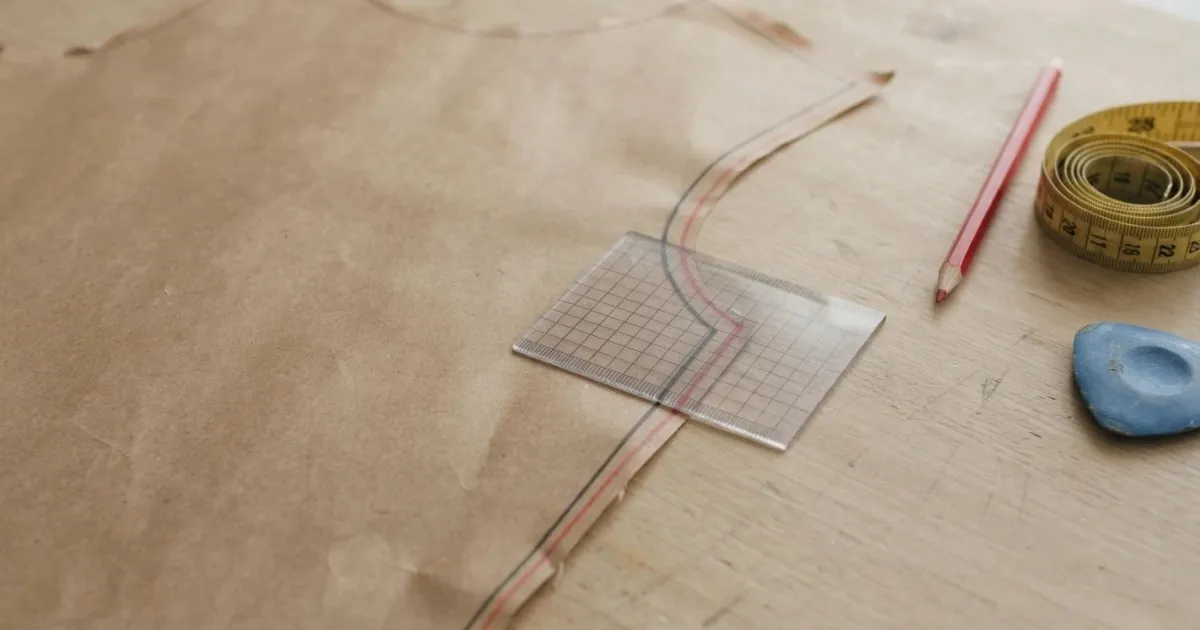
Bodice pattern with the body line and the ease line drawn side by side at the armhole and side seam
The ranges below are common starting points for total ease around the body, before any design ease. They are not rules. Adjust them to your shop’s style, your customers and the fabric, then write down what you settle on.
Garment | Bust or chest | Waist | Hip |
|---|
Fitted blouse | 2–5 cm (about 1–2 in) | 1–3 cm | – |
Kurti, regular fit | 5–10 cm (about 2–4 in) | 5–10 cm | 5–10 cm |
Gents shirt, regular fit | 8–15 cm (about 3–6 in) | 8–15 cm | 8–12 cm |
Trouser | – | 1–3 cm | 4–8 cm |
Churidar | – | Drawstring | 4–8 cm, close at the leg |
Remember that these are totals around the body. On a pattern drawn as a half front and half back, each side seam carries only its share – a quarter of the total for most garments.
For the blouse measurements these figures are added to, see our blouse cutting measurement chart.
How Fabric Changes the Ease You Need
The same pattern behaves differently in different cloth. Adjust ease for the fabric, not just the style:
Stiff silks and brocades do not give. They need ease at the upper end of the range, especially at the armhole.
Soft cottons and georgettes drape and move with the body. They can take less ease without feeling tight.
Stretch fabrics may need little or no wearing ease – sometimes less than the body measurement for a close fit.
Lined garments lose a little room to the lining. Add a touch more ease when a garment is lined.
Cottons that have not been pre-washed may shrink. Test first, or add a little extra.
More on matching fabric to garment is in our guide to which fabric for which garment.
Making Ease Consistent in Your Shop
Ease becomes reliable when it stops living in one person’s hands:
Agree a standard ease for each garment and fit – fitted, regular, relaxed – and write it down.
Record the style chosen with every order, so the cutter knows which ease to use.
Note any customer-specific changes against her name – “likes a closer fit at the waist” – and use them next time.
Check ease at the trial fitting by pinching the spare fabric at the side seam and upper arm.
When a garment comes back, record whether the problem was the measurement or the ease.
If too little or too much ease has already been cut, our garment alteration guide covers how much can be let out or taken in.
Ease in CAD
In tailoring CAD software, ease is set once for each garment and fit, then applied the same way every time a pattern is drafted from measurements. The cutter enters the customer’s measurements and the style; the software adds the shop’s ease at bust, waist, hip and armhole automatically.
That is what makes the second blouse fit like the first, and what lets a new staff member cut a garment the way your best cutter would. Customer-specific changes can be saved with her measurements, so they are never forgotten.
Questions Tailors Ask
What is ease allowance in tailoring?
It is the extra room added to the body measurement so the garment can be worn comfortably. It includes wearing ease, for movement, and design ease, for the style.
How much ease should I add to a blouse?
A fitted blouse commonly takes a small amount at the bust – a few centimetres in total – with care at the armhole and upper arm. Adjust for the fabric and the customer’s preference, and write down what works.
Is ease the same as seam allowance?
No. Seam allowance is the extra fabric beyond the stitching line, used to join the pieces. Ease is extra room inside the garment. Both are added, but for different reasons.
Why does the same pattern fit differently in different fabrics?
Because fabrics stretch, drape and hold their shape differently. Stiff fabrics need more ease, stretch fabrics need less. Adjust ease for the cloth, not just the size.
How do I check ease at a trial fitting?
Pinch the spare fabric at the side seam and the upper arm, and ask the customer to sit, raise her arms and breathe deeply. If she is comfortable and the garment does not look loose, the ease is right.
Can CAD software add ease automatically?
Yes. The shop’s ease for each garment and fit is set once, and the software applies it every time a pattern is drafted, so every cutter produces the same fit.
Make Every Fit Repeatable
Good tailors have always judged ease by eye. The best shops write it down, so every garment fits the same way, whoever cuts it. The quickest way to see your shop’s ease applied automatically is to watch a pattern drafted from measurements you brought yourself.
Book a free demo – on-site or online, in your language, with no commitment.