A pattern is only half of a garment. The same blouse pattern in a stiff cotton and in a soft georgette produces two different garments, and only one of them is the one the customer asked for. The draft did not change. The cloth did.
Most shops learn this the slow way, one returned garment at a time. A kurti that stands away from the body because the cotton was too crisp. A lehenga that hangs flat because the fabric had no body to hold the kalis out. A pair of trousers that fitted at the trial and was tight three washes later.
This is what to look at in a fabric before you cut it, a two minute test you can do at the counter, which cloth suits which garment, and how to handle the four fabrics that are genuinely difficult to cut.
The Four Properties That Decide Everything
Fabric names tell you very little. Two cloths both sold as georgette can behave completely differently. These four properties tell you what the cloth will actually do in a garment.
Drape
How the cloth falls when it is not supported. High drape follows the body and pools; low drape holds its own shape and stands away. Gathers, flares and kalis need drape. Structured garments such as coats and waistcoats need the opposite.
Weight
Light cloth moves and creases; heavy cloth hangs and holds a press. Weight also decides whether the shoulders can carry the garment, which is why a twelve kali Anarkali in heavy brocade drags the shoulder seam down however well it was cut.
Stretch
Woven cloth gives on the diagonal and almost nowhere else. Knit cloth gives in one or both directions. This changes not just the fit but the cutting: knits are cut smaller than the body, wovens larger.
Shrinkage
How much the cloth loses in the first wash. This is the property that is invisible at the counter and obvious a month later, and it is the one customers blame the tailor for.
Test a Fabric in Two Minutes at the Counter
You do not need a laboratory. Four quick checks tell you most of what you need before you quote.
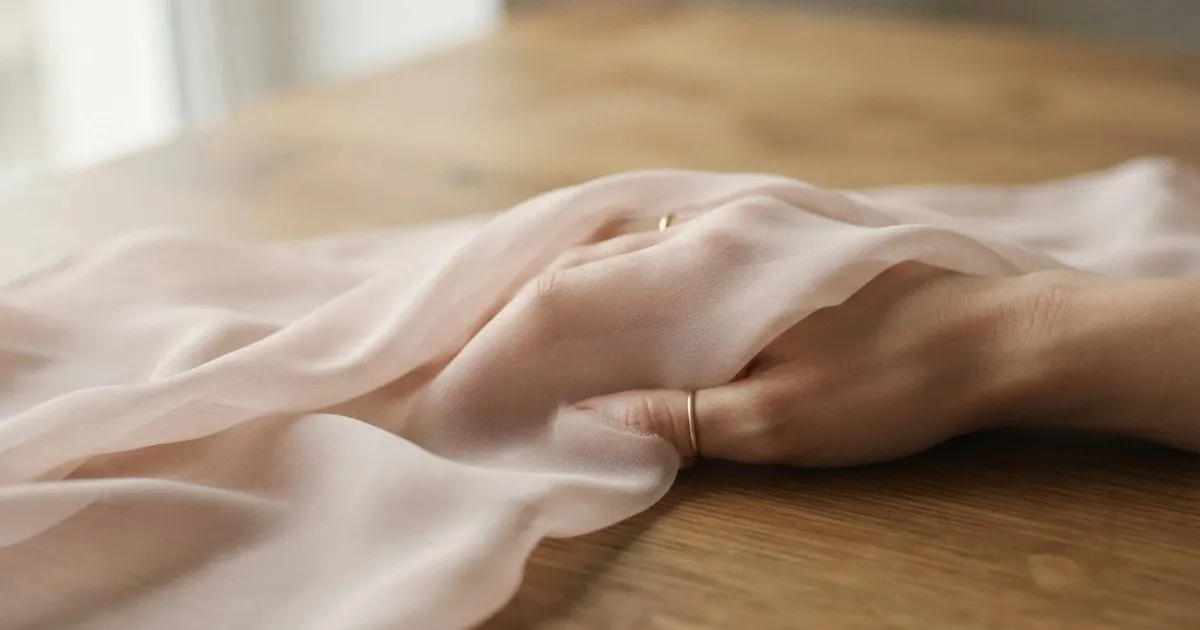
Drape it over the back of your hand and let it fall. Cloth that folds into soft rounded folds has drape and will gather and flare well. Cloth that stands out in stiff planes will hold a shape but will not fall.
Crush a corner in your fist for ten seconds and let go. Deep creases that stay mean a cotton or a linen that will need pressing all day, which matters for a garment the customer will sit in for a six hour function.
Hold it up to the light. This tells you whether it needs lining, and a customer who is told at the counter that a fabric will need lining is a customer who is not surprised by the bill.
Pull it gently on the diagonal and then along the grain. On a woven you should feel give on the diagonal and almost none along the grain. If it gives along the grain too, it has stretch in it and has to be cut accordingly.
The Shrinkage Test Is the One Worth Doing
Cut a ten centimetre square from the end of the piece, wash it the way the customer will wash the garment, dry it and measure it again. Ten centimetres that comes back at nine and a half has shrunk five per cent, which on a forty inch kurti is two inches of length.
Fabric | Typical shrinkage | What to do |
|---|
Cotton, unwashed | 3 to 7 per cent | Pre-wash the cloth, or add the length and tell the customer |
Linen | 4 to 8 per cent | Pre-wash; it also softens and improves with it |
Rayon and viscose | 3 to 5 per cent | Pre-wash, and warn that it weakens when wet |
Silk | 2 to 4 per cent | Dry clean only; do not pre-wash a zari silk |
Polyester and blends | 0 to 2 per cent | Nothing needed |
Denim | 3 to 10 per cent | Pre-wash unless the customer wants it to shrink to fit |
Pre-washing costs a day. Not pre-washing costs a garment, and the customer will remember which of you suggested it.
Which Fabric for Which Garment
A working guide rather than a rule. The point of the table is what each cloth does to the garment, not what it is called.
Fabric | Behaviour | Suits | Avoid for |
|---|
Cotton | Low drape, holds shape, creases, shrinks | Daily kurtis, shirts, school uniforms, plain salwar | Garments that need to fall or pool |
Cotton lycra | Low drape with stretch and recovery | Leggings, churidar, fitted daily wear | Anything that needs to hang free |
Rayon and viscose | High drape, soft, light | Flared kurtis, Anarkalis, palazzos, nighties | Structured garments and anything tight |
Georgette and chiffon | Very high drape, sheer, slippery | Sarees, dupattas, flared party wear over a lining | Anything unlined or closely fitted |
Crepe | High drape, matte, holds colour well | Blouses, fitted kurtis, gowns | Heavy gathers, which go limp |
Silk, raw or art | Medium drape with body, holds a flare | Lehengas, pavadais, bridal blouses | Garments needing soft pooling |
Kanjivaram and heavy silk | Low drape, heavy, stands away | Sarees and structured blouses | Kali skirts and deep gathers, which become too heavy |
Linen | Medium drape, crisp, creases heavily | Shirts, formal trousers, summer kurtis | Anything to be worn sitting for hours |
Suiting and wool blends | Low drape, presses sharply, holds a crease | Coats, waistcoats, formal trousers | Gathers and flares |
Net and can-can | No drape, pure volume | Underskirts, bridal fullness | Anything against the skin without lining |
Satin | High drape, shiny, shows every mark | Linings, gown panels, waistcoat backs | Garments handled a lot before delivery |
Denim | Very low drape, heavy, shrinks | Jeggings, casual skirts, jackets | Anything needing softness at the shoulder |
The Four Fabrics That Are Difficult to Cut
Georgette and Chiffon: They Move
Slippery cloth shifts under the scissors, so a piece cut accurately comes out crooked. Lay a sheet of paper or a cotton underlay beneath it and cut through both, weight it rather than pinning it in the body of the piece, and cut single layer rather than folded for anything that has to match.
Satin: It Remembers Everything
A pin mark in satin is permanent, and so is a chalk line on the face. Pin only inside the seam allowance, mark on the reverse, and press with a cloth between the iron and the fabric. On a bridal garment this is the difference between a finish that looks bought and one that looks stitched.
Velvet: It Has a Direction
Velvet, corduroy and anything with a pile look different depending on which way the pile runs. Every piece must be cut with the pile running the same way, or two panels of one garment will read as two different colours in a photograph. That also means the pieces cannot be nested head to tail, so it takes more cloth.
Zari Brocade: It Frays and It Is Heavy
Cut brocade with a generous seam allowance because the cut edge frays as it is handled, and overlock the pieces before they go to the machine. Its weight also limits how much fullness a yoke or a waistband can carry, which is a cutting decision, not a stitching one.
The Four Mistakes That Cost Cloth
1. The One-Way Print Was Spotted After Cutting
A directional print, a border or a pile means every piece faces the same way and nothing nests head to tail. That is a quarter to half a metre more on most garments, and it has to be known when the cloth is bought, not when it is laid.
2. The Cloth Was Not Pre-Washed
The garment fitted at the trial and was short and tight after the first wash. On unwashed cotton, linen or denim, either pre-wash the cloth or add the shrinkage to the length and tell the customer.
3. The Draft Was Right for a Different Cloth
The same ease that reads as comfortable in a rayon reads as loose in a crisp cotton. Ease is not one number for a garment; it is a number for a garment in a kind of cloth.
4. Two Dye Lots Were Used in One Garment
Cloth bought at two times, or two pieces from the same shop off two rolls, can differ enough to be invisible folded and obvious under the lights at a function. Check the lots on the day the cloth arrives.
What Changes When the Cloth Is Planned on a Computer
Choosing the cloth is still your judgement. What changes is what happens once it is chosen.
Marker planning is where cloth is actually saved, and the constraints differ by fabric: a plain cloth nests head to tail, a one-way print does not, and a pile fabric must run one direction throughout. That is easy to state and slow to do by hand across ten pieces.
Set the width and the direction rule and pattern making software lays the pieces accordingly and prints or cuts the marker at full size.
The ease question is the other half: once a garment's ease is stored per fabric type, the same kurti drafts correctly in cotton and in rayon without anybody remembering the difference. The quantities for quoting are in the fabric consumption chart.
And where the cloth actually goes to waste, rather than where it feels like it does, is covered in how to reduce fabric wastage.
Choose the Cloth Before You Trust the Draft
Every measurement chart on this site assumes a fabric that behaves normally for that garment. Change the cloth and the same numbers produce something else, which is why a tailor who cuts well can still deliver a garment that looks wrong.
Drape it over your hand, crush it, hold it to the light, pull it on the diagonal, and wash a ten centimetre square before you cut a length of cotton. Two minutes at the counter, and one day of pre-washing, prevents most of the complaints that arrive a month after delivery.
When a garment does come back, the cloth is worth suspecting before the cutting is - the garment alteration guide works backwards from the symptom.
Frequently Asked Questions
Which fabric is best for a flared kurti or Anarkali?
Rayon, viscose or a soft crepe. They have the drape to fall from a yoke without standing away from the body. Crisp cotton holds the flare out instead of letting it fall, and heavy brocade drags the shoulder seam down.
How much does cotton shrink?
Typically three to seven per cent unwashed, which is up to two inches on a forty inch length. Pre-wash the cloth, or add the shrinkage to the length and tell the customer it has been allowed for.
How do you cut slippery fabrics like georgette?
Lay a paper or cotton underlay beneath the cloth and cut through both, weight the pieces rather than pinning through the body, and cut single layer where anything has to match.
Why does a one-way print need more cloth?
Because every piece has to face the same direction, so pieces cannot be nested head to tail. Expect a quarter to half a metre more on most garments, and know it before the cloth is bought.
Should fabric be pre-washed before stitching?
Yes for unwashed cotton, linen, rayon and denim. No for silk and zari, which are dry clean only. Polyester and blends shrink very little and do not need it.
Plan the Cloth and the Pattern Together
Fashion Dot CAD stores the ease per garment and per fabric type, nests the pieces to the width and direction rule of the cloth you actually have, and prints or cuts the marker at full size. See what it costs on the tailoring CAD software price page.
Bring Your Own Cloth to a Demo
Bring a metre of the fabric you buy most and one customer's measurements. We will draft the garment live and show you the marker on that exact width and direction. Book a free demo at a time that suits your shop.