Many customers choose a back-open blouse for one reason: the dori. A neat tie at the back neck, with a pair of latkans swinging from it, turns a plain blouse into a festive one. But the same detail comes back for repair more than any other: the dori pulls out of the seam, the latkans drag the neckline down, or the strings are so short the customer cannot tie them herself.
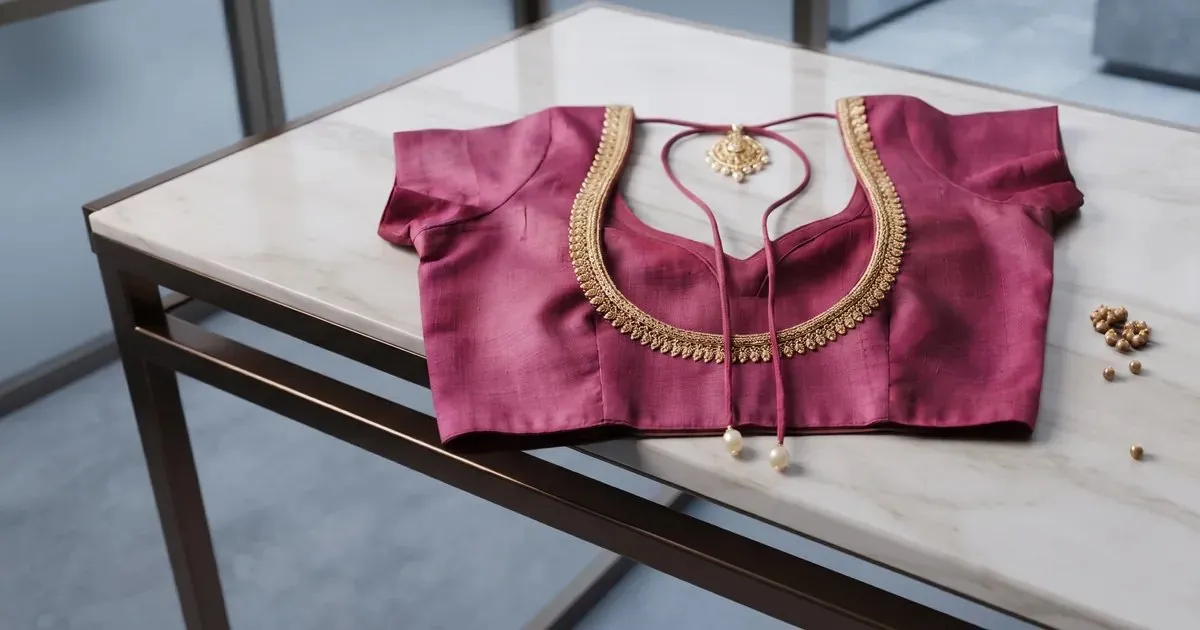
A magenta silk blouse with a gold zari neckline on a tailoring table, with a fabric dori ending in a gold pendant latkan and pearl drops, and loose beads beside it
A dori is the tie string, usually a narrow tube of fabric or a cord, sewn into the back neck or the back opening. A latkan is the tassel or ornament on the end of it. Both look decorative, but both have to carry weight and take a pull every time the blouse is tied.
Cut them to the right width and length, anchor them properly, and they last as long as the blouse.
In this guide you will find:
- Why doris pull out and latkans drag the neckline
- Which dori to make and how wide and long to cut it
- Which latkans suit which blouse
- How to make a fabric dori
- How to attach the dori and the latkans
- How the fabric changes the dori
Why Doris and Latkans Go Wrong
Four reasons, and every one is decided before the dori is sewn in.
The Dori Was Caught in a Single Row of Stitching
Every time the customer ties the blouse, the dori is pulled. Caught in only one line of stitching, it works loose within a few wears. It must be sewn in twice and bar-tacked.
The Latkans Were Too Heavy
Heavy stone or kundan latkans pull a light silk or cotton neckline down at the back and twist the dori. Match the weight of the latkan to the weight of the blouse.
The Strings Were the Wrong Length
Too short, and the customer cannot tie a bow behind her own neck. Too long, and the ends hang below the blouse and catch on the saree. Cut them to a length that ties easily and falls just to the back waist.
The Dori Was Cut on the Straight Grain
A fabric dori cut on the straight grain is stiff and hard to turn. Cut on the bias, it turns easily, ties softly and lies round.
Which Dori and How to Cut It
These are working figures in inches. The length is for each string, from the blouse to the end, before the latkan is added.
Dori | Cut strip | Finished | Each string | Best for |
|---|
Fabric tube (rouleau) | 1.00 to 1.25 bias | About 0.25 | 18 to 22 | Silk and cotton blouses |
Flat fabric dori | 1.50, folded in four | About 0.375 | 18 to 22 | Daily cotton wear |
Silk cord or satin rope | Ready-made | 0.125 to 0.25 | 18 to 22 | Quick work |
Braided dori | Three tubes | About 0.375 | 22 to 26 | Festive and bridal |
Beaded dori | Cord with beads | Thin | 16 to 20 | Party wear |
Braiding shortens the tubes, which is why a braided dori is cut longer. A fabric dori is cut like any bias strip; see our guide to bias binding.
Which Latkans Suit Which Blouse
Latkan | Weight | Best for | How it is attached |
|---|
Silk thread tassel | Light | Daily and cotton blouses | Knotted or stitched to the dori end |
Fabric ball or pom-pom | Light | Kids' wear, cotton | Stitched over the dori end |
Bead latkan | Medium | Party and silk blouses | Thread loop through the dori end |
Mirror or shell latkan | Light to medium | Festive cotton | Stitched with a firm loop |
Kundan or stone latkan | Heavy | Bridal blouses | Jump ring on a reinforced dori end |
Latkans are often charged separately from the blouse; price them by type on the rate card, as our guide to pricing stitching charges explains.
How to Make a Fabric Dori
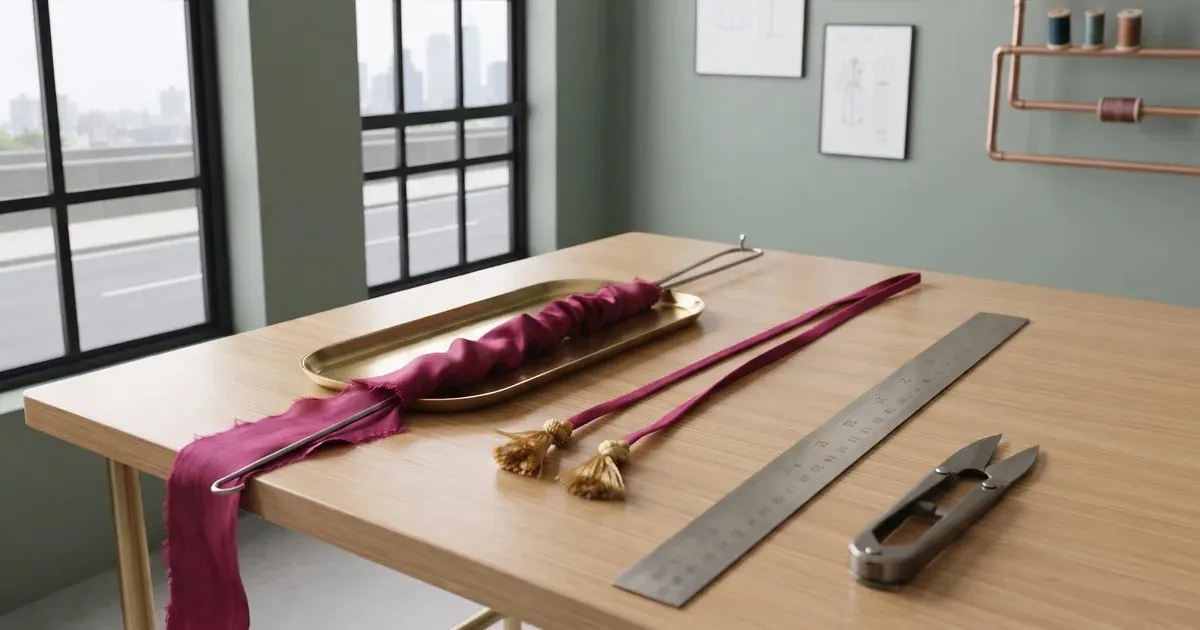
A magenta silk bias strip being turned into a fabric dori on a cutting table, with a finished dori, a loop turner, gold thread tassels and a steel ruler beside it
- Cut a bias strip to the width in the table and a little longer than the two strings together.
- Fold it in half lengthwise, right sides together, and stitch about an eighth of an inch from the fold, widening slightly at one end so it is easier to start turning.
- Trim the seam allowance to an eighth of an inch, leaving the stitching intact.
- Turn the tube right side out with a loop turner, a rouleau needle or a small safety pin.
- Press the dori flat with the seam on one edge, or roll it under your palm to keep it round.
- Cut it into two strings, and tie a small knot or turn the ends in where the latkans will go.
Attaching the Dori and the Latkans
- Decide where the dori goes: at the top corners of a back opening, at the top of a keyhole, or at the back neck above the hooks.
- Place the raw end of each string between the outer cloth and the lining, pointing inwards, with about half an inch inside the seam allowance.
- Stitch the seam over it, then stitch back over the dori a second time and finish with a small bar tack.
- Turn the blouse and check the dori lies flat and both strings are the same length.
- Attach the latkans with a firm loop or knot; for heavy latkans, fold the dori end back on itself and stitch it before adding a jump ring.
- Tie a test bow behind the trial blouse to check the length before the blouse is delivered.
The back neck depth and width the dori is placed on come from our blouse cutting measurement chart. For back styles that use a dori, see our trending blouse back neck designs.
How the Fabric Changes the Dori
- Cotton – turns easily into a firm dori; ideal for flat and tube doris.
- Silk and pattu – makes a soft, shiny dori; cut a little wider because silk frays as you turn it.
- Georgette and chiffon – too soft alone; use a cord inside the tube, or use a satin rope dori.
- Velvet – a rich dori for winter and bridal blouses, but cut it wider; the pile makes turning hard.
- Brocade – cut the dori from a plain part of the cloth, because zari is stiff and hard to turn.
- Net and lace blouses – use a satin or silk cord dori; net cannot be turned into a tube.
Dori Points in Tailoring CAD
In tailoring CAD the back neck opening and the keyhole are drafted from the measurements, so the dori points can be marked on the back and lining pattern pieces. The cutter transfers them with the notches, and the tailor places the strings in the same spot on every blouse of that style.
Our tailoring CAD software page shows how blouse backs are drafted from one set of measurements.
Questions Tailors Ask
How long should a blouse dori be?
About 18 to 22 inches for each string, so the customer can tie a bow and the ends fall just to the back waist.
How wide should I cut a fabric dori?
About 1 to 1.25 inches on the bias for a round tube dori that finishes at about a quarter of an inch.
How do I stop the dori pulling out?
Sew it between the outer cloth and the lining, stitch over it twice, and finish with a small bar tack.
What is a latkan?
A tassel or small ornament on the end of the dori, made from silk thread, beads, mirrors, shells or stones.
Why does my blouse neckline pull down at the back?
The latkans are too heavy for the cloth. Use lighter latkans, or support the back neck with a light interfacing.
Can I use ready-made dori?
Yes. Silk cord and satin rope doris are quick and come in many colours. A self-fabric dori matches the blouse exactly, which most customers prefer for silk.
Anchor It Twice, Match the Weight
A dori and a pair of latkans are the details a customer shows off. Cut the dori on the bias to the right length, sew it in twice with a bar tack, and match the latkans to the weight of the blouse, and the back will look as good on the tenth wear as on the first.
Book a free demo – on-site or online, in your language, with no commitment. Bring a back-open blouse design and we will draft the back and the dori points on screen.