Almost every saree that comes into a tailoring shop for a blouse also needs a fall and pico. It looks like small work, and it is often handed to the newest person in the shop. Then the customer comes back: the border waves after the first wash, a line of stitches shows on the front of a silk saree, or the pico at the pallu has frayed into loose threads.
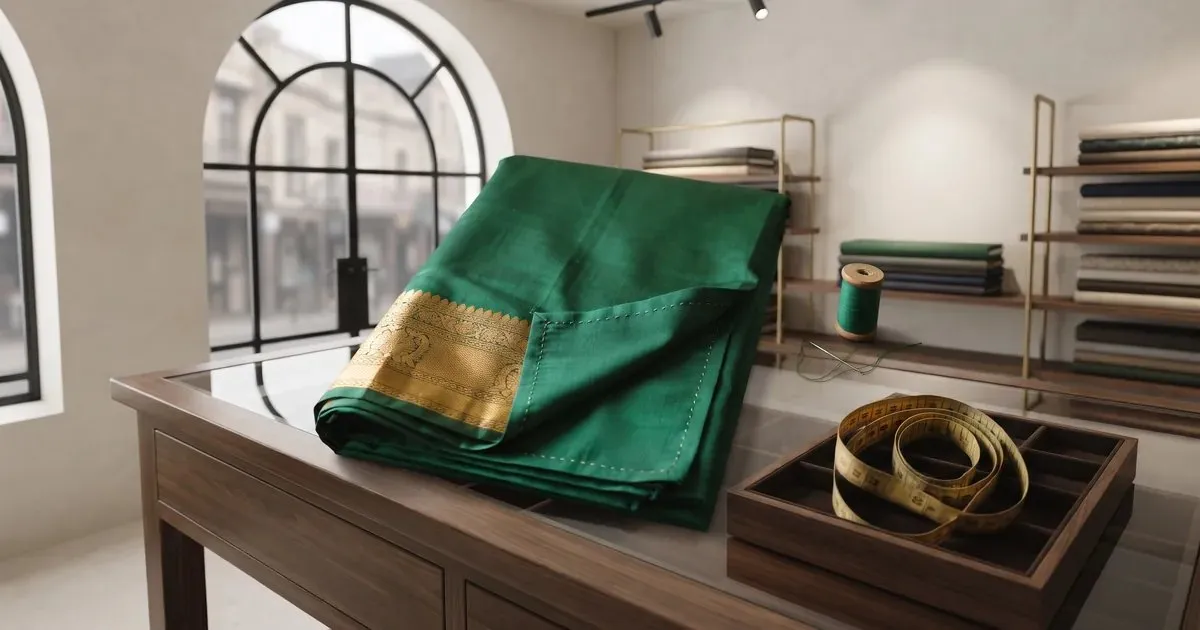
A folded silk saree with a gold zari border on a tailoring table, its lower border turned back to show a matching cotton fall stitched inside, with thread and a needle beside it
A fall is a strip of cloth stitched inside the lower border of the saree. It adds weight so the saree drapes and falls straight, and it protects the border where it brushes the floor. Pico is the narrow edge finish on the cut ends of the saree, so they do not fray.
Both are simple, but both are seen on the most expensive garment the customer owns.
In this guide you will find:
- Why a fall puckers, shows or waves the border
- Which fall to use for each kind of saree
- Where the fall goes and how long it should be
- How to stitch a fall so no stitch shows
- Which edges need pico and how to finish them
- How to price fall and pico work
Why a Saree Fall Goes Wrong
Four reasons, and every one of them can be avoided before the needle goes in.
The Fall Was Not Pre-Shrunk
A cotton fall shrinks in the first wash. A silk saree barely shrinks at all. Stitch an unwashed fall to it and the first wash pulls the border into waves. Soak the fall and let it dry before you stitch it.
The Colour Did Not Match
The fall shows through thin sarees and peeps out at the hem when the customer walks. Match it to the border colour, not the body of the saree, and check it in daylight.
The Stitches Went Through to the Front
On silk and chiffon every stitch that catches the front shows as a dot. The fall must be hemmed by picking up only a thread or two of the saree, never going right through.
The Fall Was Pulled While Stitching
A fall stitched under tension shortens the border and makes it ripple. Lay the saree and the fall flat on the table and stitch them without pulling either.
Which Fall for Which Saree
Ready-made falls are usually sold in lengths of about 2.25 to 2.50 metres. These are working choices; widths are in inches.
Saree | Fall to use | Width | Stitching |
|---|
Cotton | Cotton fall | 3.00 | Hand hemming or a machine line near the edge |
Silk and pattu | Soft cotton fall, border colour | 3.00 to 3.50 | Invisible hand hemming only |
Georgette and chiffon | Soft, light fall | 2.50 to 3.00 | Very light hand hemming |
Heavy zari border | Firm cotton fall | 3.50 to 4.00 | Beside the zari, never through it |
Net and organza | Light matching fall | 2.50 | Hand hemming, small stitches |
Synthetic and crepe | Cotton or polyester fall | 3.00 | Hand or machine |
Which cloth behaves how in the wash is covered in our guide to which fabric for which garment.
Where the Fall Goes
- The fall goes along the lower border on the inside of the saree, on the part that goes round the body and into the pleats.
- It starts near the plain end that is tucked in at the waist and runs towards the pallu, ending before the pallu begins.
- It is not stitched under the pallu, because the pallu hangs over the shoulder and the fall would show.
- Its lower edge sits about an eighth of an inch above the saree's edge, so the fall never shows below the border.
- If the customer drapes in a regional style, ask how she wears it before deciding where the fall starts.
- The saree is worn over a petticoat; how the petticoat length is set is in our saree petticoat cutting measurement chart.
How to Stitch the Fall
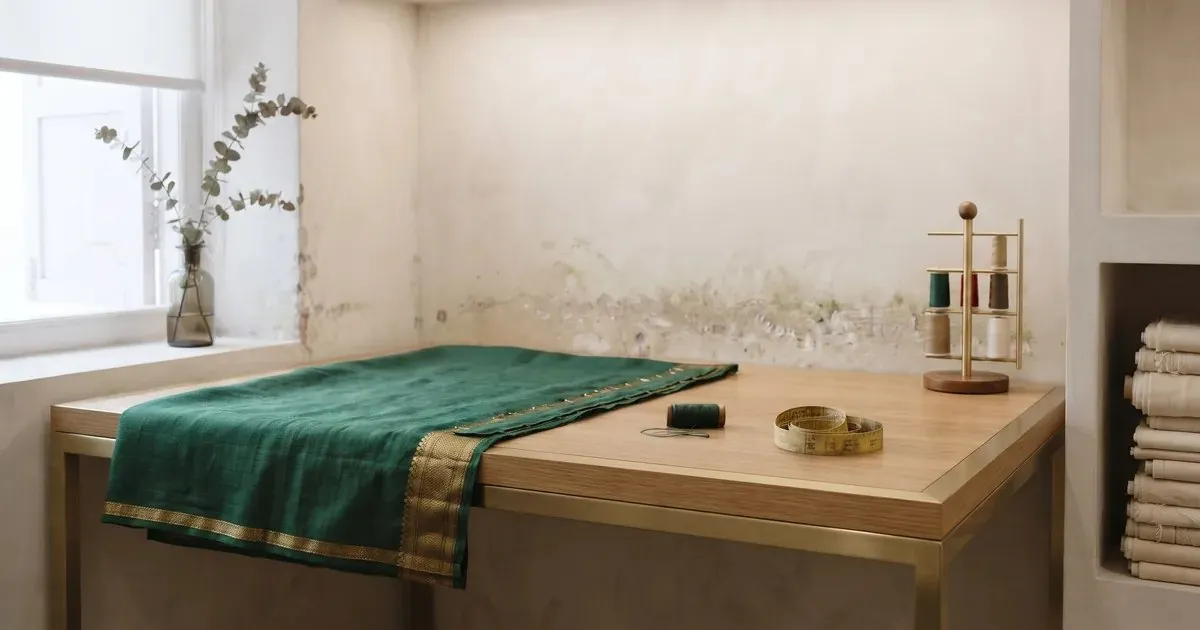
The lower border of a saree on a cutting table with a cotton fall strip pinned along it, beside a spool of matching thread, a needle and a measuring tape
- Soak the fall in water, dry it in the shade and press it. Do this before it touches the saree.
- Lay the saree flat on the table, wrong side up, with the lower border towards you.
- Place the fall along the border, its lower edge about an eighth of an inch above the saree edge, and pin it every few inches without stretching either layer.
- Hem the lower edge first with small slanting stitches, picking up only one or two threads of the saree each time.
- Hem the upper edge of the fall the same way, along the inner edge of the border, so it lies flat.
- Fold the cut ends of the fall under and stitch them down, then press lightly from the wrong side.
Which Edges Need Pico
Edge | Finish | Width | Notes |
|---|
Pallu end | Pico or tassels | About 0.125 | Tassels for silk and festive sarees |
Where the blouse piece was cut off | Pico | About 0.125 | The most common pico job |
Cut edge with no selvedge | Pico | About 0.125 | Common on printed and synthetic sarees |
Georgette and chiffon edges | Rolled pico | Under 0.125 | A narrow rolled edge is neater |
Heavy zari pallu | Hand-rolled hem or tassels | Narrow | Machine pico can catch the zari |
Use thread that matches the saree, set the pico machine for the cloth weight, and test on the blouse-piece offcut before running the whole edge. Trim the edge straight first; pico on a crooked edge is still crooked.
How the Fabric Changes the Work
- Cotton – the easiest saree for fall and pico; a machine line on the fall is acceptable.
- Silk and pattu – hand hemming only, a colour-matched soft fall, and no stitch on the front.
- Georgette and chiffon – a light fall and a rolled pico; heavy work pulls these sarees out of shape.
- Zari and heavy borders – keep every stitch beside the zari, never through it.
- Net and organza – small stitches and a light fall, because the cloth shows every mistake.
- Printed synthetics – quick to finish, but match the pico thread to the main print colour.
Pricing Fall and Pico Work
Fall and pico are small jobs, but they add up to a real share of a shop's monthly income, and they are often given away free or underpriced with a blouse order. Price them separately on the rate card: fall stitching, pico, and tassels as three lines, with a higher rate for silk and zari sarees that need hand work. How to build a rate card that covers your time is in our guide to pricing stitching charges.
Sarees for fall and pico pile up quickly in the festive season. Sending a delivery photo and a reminder on WhatsApp keeps them moving; see our guide to WhatsApp for tailor shops.
Questions Tailors Ask
What is a saree fall?
A strip of cloth stitched inside the lower border of a saree. It adds weight so the saree drapes well and protects the border from wear.
How long is a saree fall?
Ready-made falls are usually about 2.25 to 2.50 metres long, enough for the part of the border that goes round the body and into the pleats.
Should a saree fall be washed before stitching?
Yes. A cotton fall shrinks in its first wash and will pull the border into waves if it is stitched on unwashed.
What is pico in a saree?
A narrow machine edge finish on the cut ends of a saree, such as the pallu end or where the blouse piece was cut off, so the edge does not fray.
Why do fall stitches show on my silk saree?
The needle went through to the front. Pick up only one or two threads of the saree with each stitch, and use thread that matches the border.
Does a georgette saree need a fall?
Usually a light one, yes. It helps the soft cloth hang straight. Use a narrow, soft fall and very light hand stitches.
Small Work, Seen Every Time
Fall and pico are finished in minutes, but they are worn every time the customer drapes her saree. Soak the fall, match it to the border, hem it without a stitch on the front, and test the pico on an offcut first, and the saree will drape and wear the way it should.
Book a free demo – on-site or online, in your language, with no commitment. See how our tailoring CAD software helps a busy shop cut blouses faster, so there is time left for the finishing work.