An elastic waist looks like the one part of a garment that cannot go wrong. Then a customer comes back with a palazzo that slides down at the waist, a pyjama whose elastic has twisted into a rope inside the casing, or a child's pant that leaves a red mark on the stomach. Each one came from the same few guesses about length, width and casing.
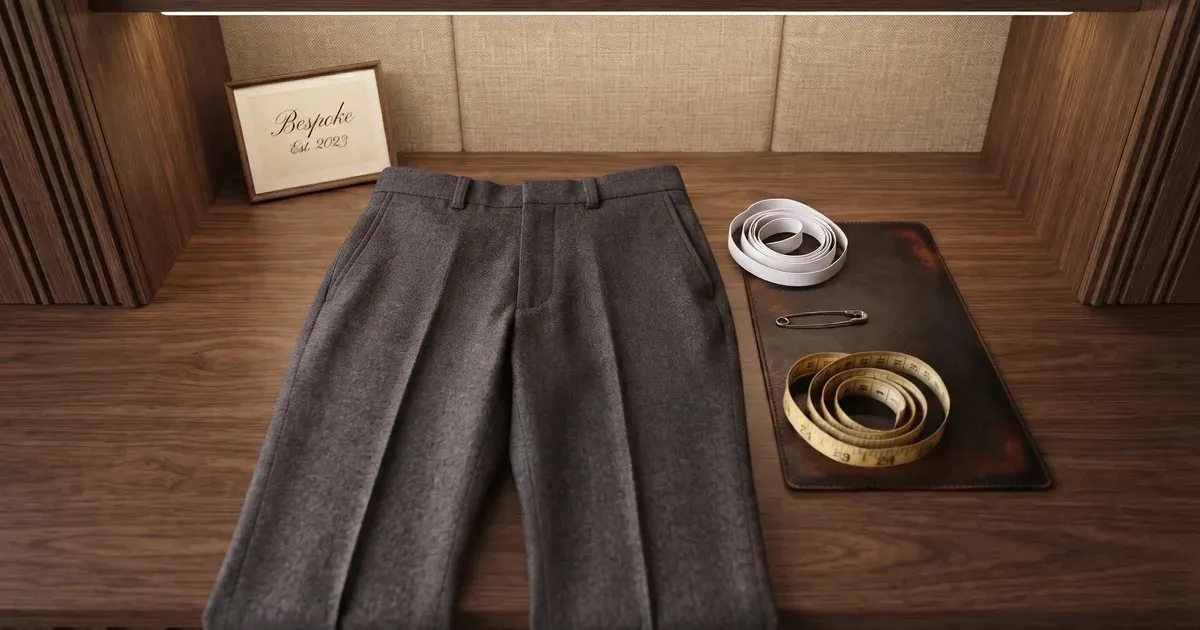
Grey trousers laid flat on a tailoring table beside a coil of white elastic, a safety pin and a measuring tape
Elastic is used on palazzos, pyjamas, leggings, nightwear, kids' wear, petticoats and puff sleeves. It has to be short enough to hold the garment up, long enough to stay comfortable all day, and stretchy enough to pass over the hips. Those three things can be worked out from the waist and hip measurements before any elastic is cut.
The same is true of the nada, the drawstring that many customers still prefer.
In this guide you will find:
- Why elastic waists slip, pinch or twist
- How much elastic to cut for each garment
- When to use elastic, a nada or both
- How to cut and make the casing
- How to insert and secure the elastic
- How the fabric changes the waistband
Why Elastic Waists Go Wrong
Four reasons, and all of them are decided before the elastic goes into the casing.
The Elastic Was Cut to the Full Waist
Elastic cut to the full waist measurement holds nothing up; it only gathers the cloth. It must be cut shorter than the waist so it grips gently.
It Would Not Pass Over the Hips
Cut too short, the elastic grips well at the waist but the customer cannot pull the garment up over the hips, or it leaves a mark. Stretch the cut elastic and check it reaches the hip measurement.
The Casing Was Too Narrow
Elastic squeezed into a tight casing curls and rolls over inside it. The casing must be a little wider than the elastic, so it lies flat.
The Wrong Elastic Was Used
Braided elastic narrows when it stretches and rolls easily; it suits sleeves and narrow casings. Knitted and woven elastic keep their width and suit waistbands. Using the wrong one is a common reason for a twisted waist.
How Much Elastic to Cut
The usual working rule is about nine tenths of the waist for adults, plus an inch to overlap the ends. These are working figures in inches; check every elastic against the hip before closing it.
Garment | Elastic width | Elastic length to cut | Casing width |
|---|
Palazzo and ladies' pant | 1.00 to 1.50 | Waist x 0.90 + 1.00 | Elastic + 0.25 |
Pyjama and nightwear | 0.75 to 1.00 | Waist x 0.90 + 1.00 | Elastic + 0.25 |
Leggings | 1.00 | Waist x 0.85 + 1.00 | Elastic + 0.125 |
Kids' pant and skirt | 0.50 to 0.75 | Waist x 0.90 + 0.75 | Elastic + 0.25 |
Elastic petticoat | 0.75 | Waist x 0.90 + 1.00 | Elastic + 0.25 |
Puff sleeve hem | 0.25 to 0.375 | Arm round x 0.90 + 0.50 | Elastic + 0.125 |
For a 30-inch waist, a palazzo elastic is cut to about 28 inches: 27 for the waist and 1 for the overlap. The waist and hip figures for these garments are in our palazzo cutting measurement chart and our leggings cutting measurement chart.
Elastic, Nada or Both
Waist finish | Best for | Adjustable | Notes |
|---|
Elastic in a casing | Palazzos, leggings, kids' wear | No | Quick to wear; the most common |
Nada in a casing | Pyjamas, salwars, petticoats | Yes | Lasts longer than elastic |
Elastic and nada together | Customers who want both | Yes | Elastic holds, nada fine-tunes |
Elastic at the back only | Smart palazzos and pants | No | Flat front, gathered back |
Shirred elastic thread | Kids' frocks, tops | No | Rows of elastic thread in the bobbin |
A nada is usually cut about 24 inches longer than the waist so it can be tied, and comes out through two small buttonholes or eyelets at the centre front. Pyjama waist and length figures are in our kurta pyjama cutting measurement chart.
Cutting and Making the Casing
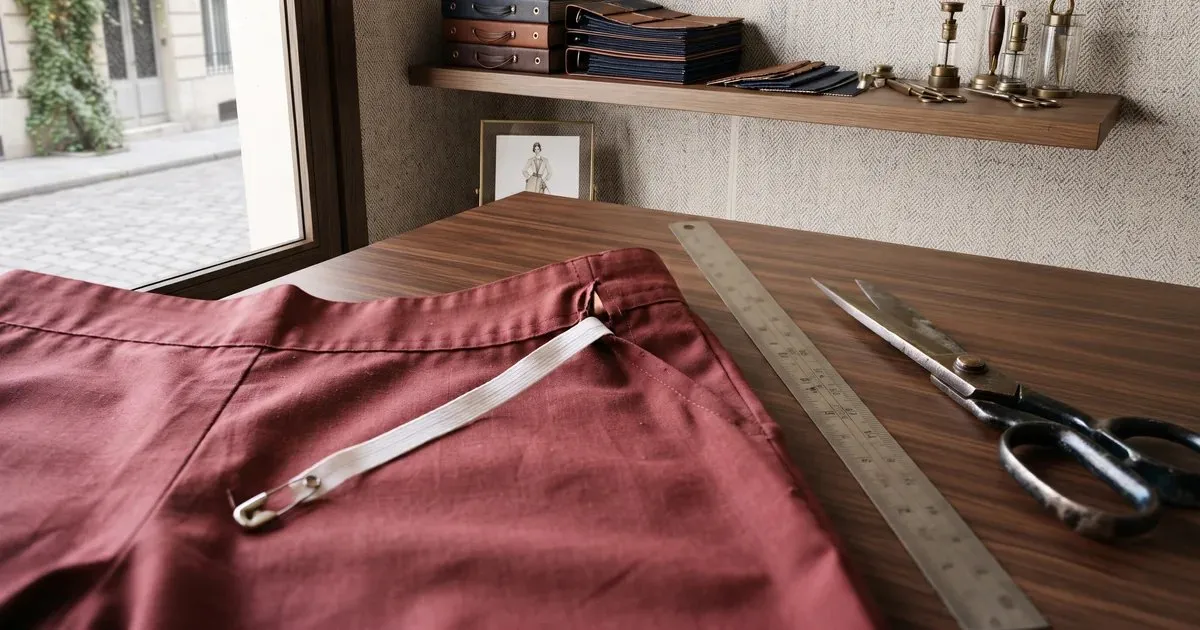
The folded waist casing of a pant on a cutting table with white elastic being threaded through on a safety pin, beside a steel ruler and shears
- At the top of the pant or skirt, add a casing allowance of twice the casing width plus 0.25 for the turn-under.
- For a nada, mark the two buttonholes or eyelets at the centre front on the casing area before folding, and reinforce them with a small square of interfacing.
- Turn under 0.25 along the top edge, then fold the casing down to its width and press it flat.
- Stitch close to the lower fold all round, leaving a gap of about 1.50 at a side seam to insert the elastic.
- For a neater top edge, add a second row of stitching close to the upper fold.
- Cut the elastic to the length in the table, and check it stretches comfortably past the hip measurement before inserting it.
Inserting and Securing the Elastic
- Fix a safety pin to one end of the elastic and push it through the casing, holding the other end so it does not disappear inside.
- Keep the elastic flat as it goes round; check that it has not twisted before joining the ends.
- Overlap the two ends by about an inch and zigzag them together in a square or a cross.
- Let the elastic slip into the casing, spread the gathers evenly and close the gap with a straight stitch.
- Stitch straight down through the casing and the elastic at each side seam, so the elastic can never roll or twist.
- For a flat-front waist, stitch the elastic down at both side seams and run it only across the back.
Spreading the fullness evenly round the waist is the same skill as gathering; see our guide to gathers and fullness.
How the Fabric Changes the Waistband
- Cotton – any elastic works; a 1-inch knitted elastic is the usual choice for palazzos and pyjamas.
- Rayon and crepe – the cloth is heavy and slides, so use a wider elastic or elastic with a nada.
- Silk and georgette – a narrow elastic in a soft casing, or a nada, so the waist does not bunch.
- Knits and lycra – fold the casing over the elastic and stitch with a stretch stitch so it can stretch with the cloth.
- Heavy cloth – reduce bulk by using a separate casing strip of lighter cloth.
- Kids' wear – soft, wide elastic, cut a little looser, so it never marks the skin.
Elastic Waists in Tailoring CAD
In tailoring CAD the casing allowance is added to the top of the pattern from the elastic width, and the elastic length is worked out from the customer's waist with the same rule each time. The cutter gets the piece with the casing already on it and the elastic length printed beside it, so no two pants of the same size end up with different waists.
Our tailoring CAD software page shows how pants and palazzos are drafted from one set of measurements.
Questions Tailors Ask
How much elastic do I need for a waist?
About nine tenths of the waist measurement plus an inch for the overlap. For a 30-inch waist, cut about 28 inches.
What width of elastic is best for a palazzo?
One inch to one and a half inches of knitted elastic. It holds the weight of the cloth and does not roll.
Why does the elastic twist inside the casing?
The casing is too narrow, the elastic is braided, or it was not stitched at the side seams. Widen the casing, use knitted elastic and stitch through at the sides.
How long should a nada be?
About 24 inches longer than the waist, so there is enough to tie a bow at the front.
How wide should the casing be?
A quarter of an inch wider than the elastic, so it slides through easily and lies flat.
Should I use elastic or a nada for a salwar?
Many customers prefer a nada for salwars and petticoats because it is adjustable and lasts longer. Elastic with a nada together gives the comfort of both.
Cut Shorter, Test Over the Hip
An elastic waist is comfortable only when the elastic is the right length and lies flat. Cut it to nine tenths of the waist, test it over the hip, make the casing a little wider than the elastic, and stitch it at the side seams, and the waist will stay up and stay flat wash after wash.
Book a free demo – on-site or online, in your language, with no commitment. Bring a palazzo whose waist keeps slipping and we will draft the waist and casing on screen.