A shirt that fits slightly wrong is tolerated. A pant that fits slightly wrong is returned. This gents pant cutting measurement chart covers the nine measurements a trouser is cut from, where each one is taken on the body, how much ease to add, and the four mistakes that send a finished pant back to the shop for alteration.
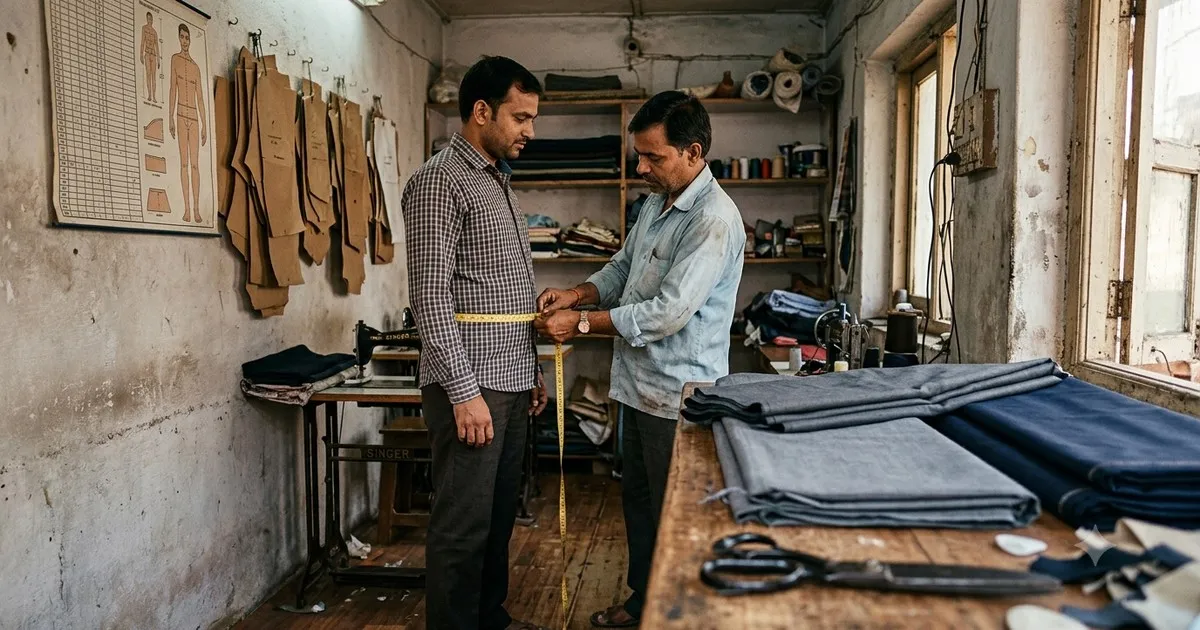
Tailor measuring a customer for gents pant cutting with the measurement chart on the shop wall
The customer puts the pant on. He sits down. It pulls at the seat. He stands, and there is a fold under the waistband at the back. He does not say the crotch is short or the seat is tight — he says it does not feel right, and asks when it can be altered.
Most of the time the cloth was fine and the stitching was fine. One of two numbers was wrong: the seat, or the crotch.
A trouser has fewer measurements than a shirt but far less tolerance. The chest of a shirt can be an inch out and nobody notices. A crotch half an inch short is felt on the first step.
In this guide you will find:
The nine measurements a gents pant pattern is built from
Where each one is taken on the body
How much ease to add, and why
The crotch measurement most shops skip, and what it costs
The four mistakes behind most pant alterations
What changes when the pant is drafted on a computer
Why Gents Pant Cutting Goes Wrong
Three reasons, in the order they cost the most.
The Seat Was Measured Standing Still
The seat is measured at the fullest part of the hip, with the tape level. Taken tight, or taken on a customer standing unnaturally straight, the pant binds the moment he sits. Add the ease and check the figure with him seated if you are unsure.
The Crotch Was Guessed
Crotch depth, or rise, is the one measurement most shops estimate from the waist size. It is the single commonest cause of a pant that "does not feel right". Two men with a 34 waist can need crotch depths an inch apart.
The Bottom Was Cut to Fashion, Not to the Shoe
A narrow bottom looks correct on the hanger and rides up over the shoe when he walks. Ask what footwear he wears with it before fixing the bottom width.
The Gents Pant Measurement Chart: All 9 Measurements
Take all nine on the body over light clothing, never over a pant he is already wearing. A worn pant already contains somebody else’s ease.
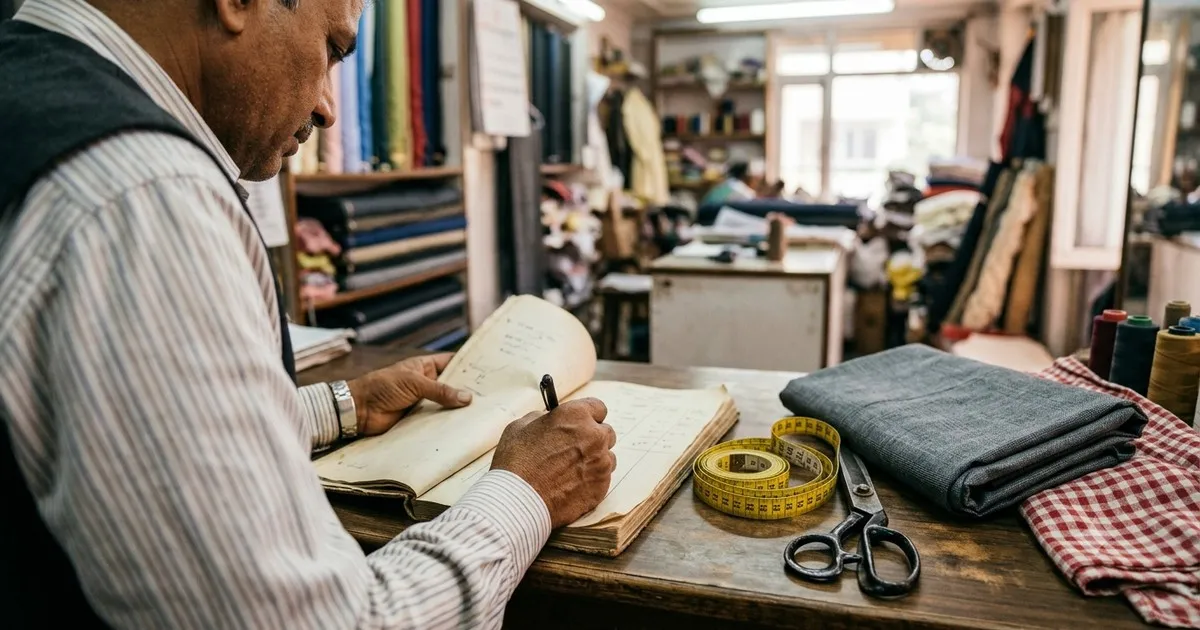
Tailor writing the nine gents pant measurements into the order book before cutting the cloth
# | Measurement | Where it is taken | Typical ease |
|---|
1 | Waist | Natural waist where the waistband will sit, one finger inside the tape | 1 in |
2 | Seat | Fullest part of the hip, tape level all the way round | 2-3 in |
3 | Length (outseam) | Waist down the outside of the trouser leg to the required bottom | as ordered |
4 | Inseam (inside) | Crotch down the inside of the leg to the bottom | as ordered |
5 | Crotch depth (rise) | Seated: waist to the chair. Or length minus inseam | 0.25-0.5 in |
6 | Thigh | Fullest part of the thigh, about 1 in below the crotch | 2-3 in |
7 | Knee | Round the knee, leg straight | 3-4 in |
8 | Bottom | Round the leg opening at the required finished width | by style |
9 | Hip (upper) | About 3 in below the waist, for a close-fitting pant | 1-2 in |
Record the raw measurement in one column and the finished measurement with ease in another. A single number leaves the next person guessing which one it is.
Crotch Depth: The Measurement Worth Taking Properly
If you take only one measurement more carefully after reading this, take this one.
Sit the customer on a hard flat chair, back straight. Measure from the natural waist down the side to the chair seat. That figure is his crotch depth. Add a quarter to half an inch of ease depending on how he likes the pant to sit.
Too short: the pant pulls up at every step and creases across the front.
Too deep: the crotch hangs, the seat looks empty and the leg reads shorter than it is.
Correct: he forgets he is wearing it, which is the whole objective.
The alternative method — length minus inseam — works, but it inherits any error in either of those two figures. On a customer who is difficult to fit, take it seated.
The Four Mistakes That Cause Most Alterations
1. Waist Taken Over the Shirt and Belt
The waistband sits on the body, not on a tucked shirt. Measured over both, the pant comes out an inch loose and slides down through the day.
2. Thigh Measured at the Crotch
Take it about an inch below the crotch, at the fullest part. Taken right at the crotch it reads large, the leg is cut wide, and the pant looks shapeless from the side.
3. Seat Ease Left Out on Formal Cloth
Two to three inches at the seat is not generosity, it is what lets him sit. Formal suiting has almost no give, so the ease has to be in the pattern.
4. Both Legs Cut From One Measurement
Most men are not symmetrical. On a customer who has complained before, measure the inseam on both legs and note the difference on the sheet.
The Pieces a Gents Pant Draft Produces
A full gents pant draft, sometimes called a trouser block, comes out as these pieces:
Front leg — with the pleat or dart the style calls for
Back leg — with the seat dart
Waistband
Pocket bags and facings
Fly piece and fly guard
Belt loops
Get the front and back leg right and everything else follows. Get the crotch curve wrong and nothing below the waist sits correctly, however good the rest of the draft is.
Pleated or Flat Front?
This changes the pattern, not just the look, so decide it before cutting:
Style | Suits | Pattern effect |
|---|
Flat front | Slim build, formal and office wear | Less width at the waist; the fit at the seat matters more |
Single pleat | Most customers, most days | Extra width folded at the waist, easy movement |
Double pleat | Fuller build, traditional formal | Most room; needs a deeper crotch to hang correctly |
Side adjusters, no belt | Wedding and formal | Waistband drafted separately, no belt loops |
Hand Drafting or CAD: Which Suits Your Shop?
The answer depends less on the size of the shop and more on how many pants are cut each week, and how many different people cut them.
Shop situation | Suitable approach |
|---|
A few pants a week, one experienced cutter | Hand drafting with a written measurement sheet |
Regular pant orders, more than one person cutting | Standard blocks on paper, kept in a labelled file |
Repeat customers expecting the same fit each time | Digital patterns stored against the customer |
Uniform or bulk pant orders | CAD drafting with full-scale printed patterns |
New staff who have never drafted by hand | CAD, so the skill needed is measuring rather than drafting |
Shop losing cloth to re-cutting | CAD, where the pattern comes out identical every time |
What Changes When the Pant Is Drafted on a Computer
Fashion Dot launched India’s first computerised gents-wear cutting software in 2012 and has refined it since with feedback from more than 11,000 tailors and boutiques, building tailoring technology from Coimbatore since 2003.
The nine measurements do not change. What changes is everything after them:
The measurements are entered once and the software drafts every piece to full size.
The crotch curve is calculated from the depth rather than drawn by eye.
The same customer’s measurements produce the same pattern next month and next year.
The pattern prints full-scale on continuous roll paper 15 inches wide, ready to lay on the cloth.
Because the pieces are placed by the software rather than by eye, shops typically use 5-15% less fabric than hand marking.
Training is available in Tamil, Hindi, Telugu, Kannada and English.
The gents module is described in detail on the gents tailoring software page.
Plans and what each one includes are on the tailoring CAD software price page.
Good Cutting Starts With the Measurement Sheet
The biggest improvement in a gents tailoring shop rarely comes from a new machine. It comes from recording the measurement properly at the counter.
If the nine numbers, the ease, the style and the delivery date are captured on one sheet against one order number, the cutter is not reconstructing anything later. A workflow that holds up under pressure looks like this:
Measurements taken — Ease recorded — Pattern drafted — Cloth laid — Pieces cut — Stitching assigned — Fit checked at delivery
Questions Tailors Ask
How many measurements are needed for a gents pant?
Nine for a standard formal pant. A close-fitting or a cargo style needs one or two more, usually an extra hip reading or a pocket position.
How much ease should be added at the seat?
Two to three inches for a regular fit. Below two the pant binds when he sits, which is the commonest alteration request on formal trousers.
What is the correct crotch depth?
Measure it seated: natural waist to the chair, plus a quarter to half an inch. Estimating it from the waist size is where most poor-fitting pants begin.
Can someone with no drafting experience cut a gents pant?
By hand, not reliably — the crotch curve takes practice. With CAD the measurements are entered and the software produces the full-size pattern, so the skill required shifts from drafting to accurate measuring.
Why do two pants cut from the same measurements fit differently?
Usually because the ease was applied from memory rather than from a written figure, or because the crotch curve was redrawn by hand instead of being reused.
Is there a standard gents pant cutting measurement chart in inches?
The nine measurements above are the standard set, and the ease column is where shops differ. Print the chart, write your own shop’s ease figures into it once, and use that as the sheet every cutter works from. A chart without your ease on it is only half a chart.
What is the difference between pant and trouser measurements?
None. The two words are used for the same garment in Indian tailoring, and the same nine measurements apply whether the customer asks for a pant or a trouser.
Does the same chart work for a cargo or a track pant?
The body measurements carry over. The ease and the pocket positions are different, and a cargo needs extra width at the thigh for the pocket to sit flat.
See a Pant Drafted From Your Own Measurements
Bring a customer’s measurements to a free demo and watch the pant pattern drafted and printed to full scale, crotch curve included. The demo is available on-site or online, in your language, with no commitment.
Book a free demo and bring the measurements of a customer whose pant gave you trouble last month.