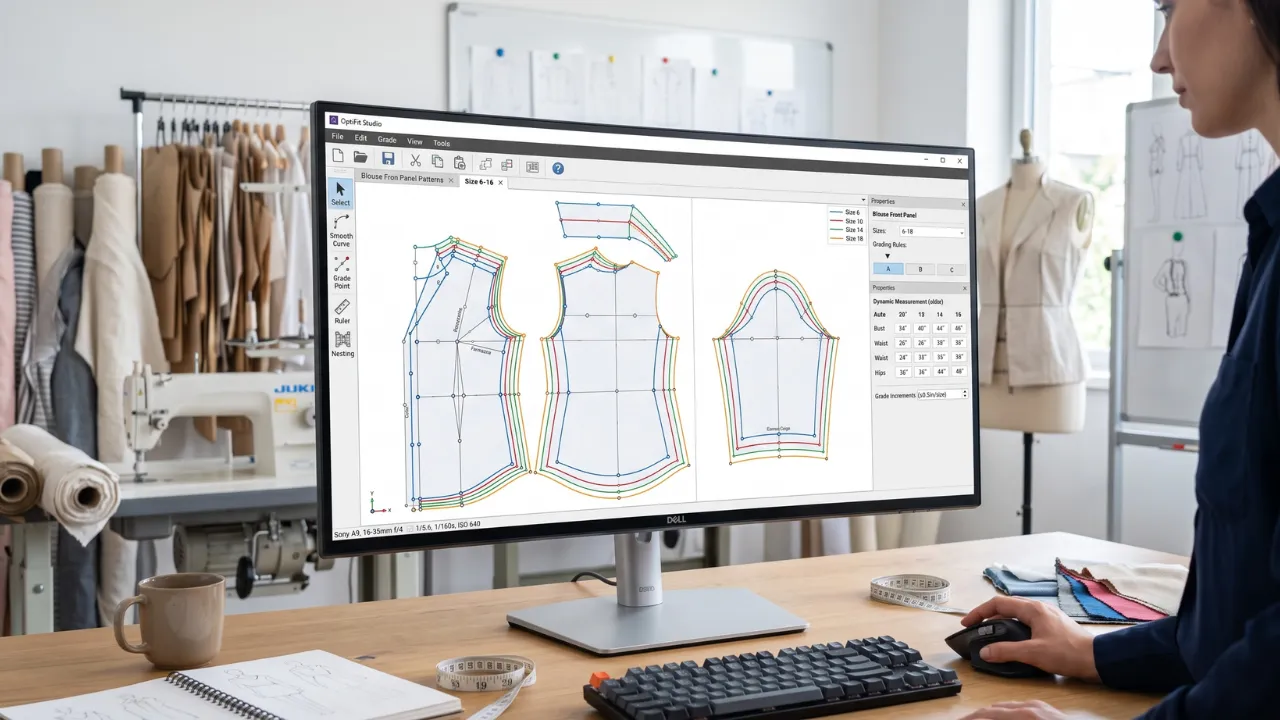
If you have ever found yourself painstakingly re-drafting the same blouse or chudidhar pattern onto newsprint for the hundredth time, advanced technology is the solution that ends that exhausting cycle. Traditional manual drawing is slow, error-prone, and dependent on a single worker's daily calculation consistency. In 2026, the modern apparel market demands hyper-fast turnarounds and perfect fit repeatability—milestones that are mathematically impossible to guarantee with manual chalk strips alone.
With pattern making software, these same measurements produce a ready-to-cut pattern in under a minute.
Automated pattern making software serves as a digital cutting-master assistant that permanently secures your design catalog, automates pattern enlargement, and syncs directly with output devices. This guide cuts through the technical jargon to show exactly how digital tailoring tools can optimize your workshop’s bottom line.
Shifting from Chalk to Digital Prototyping
At its functional core, modern tailoring software bridges the gap between raw tape measurements and finished, tailored fabric panels. Instead of manually plotting geometric coordinates, the user handles everything within a dynamic, centralized digital dashboard.
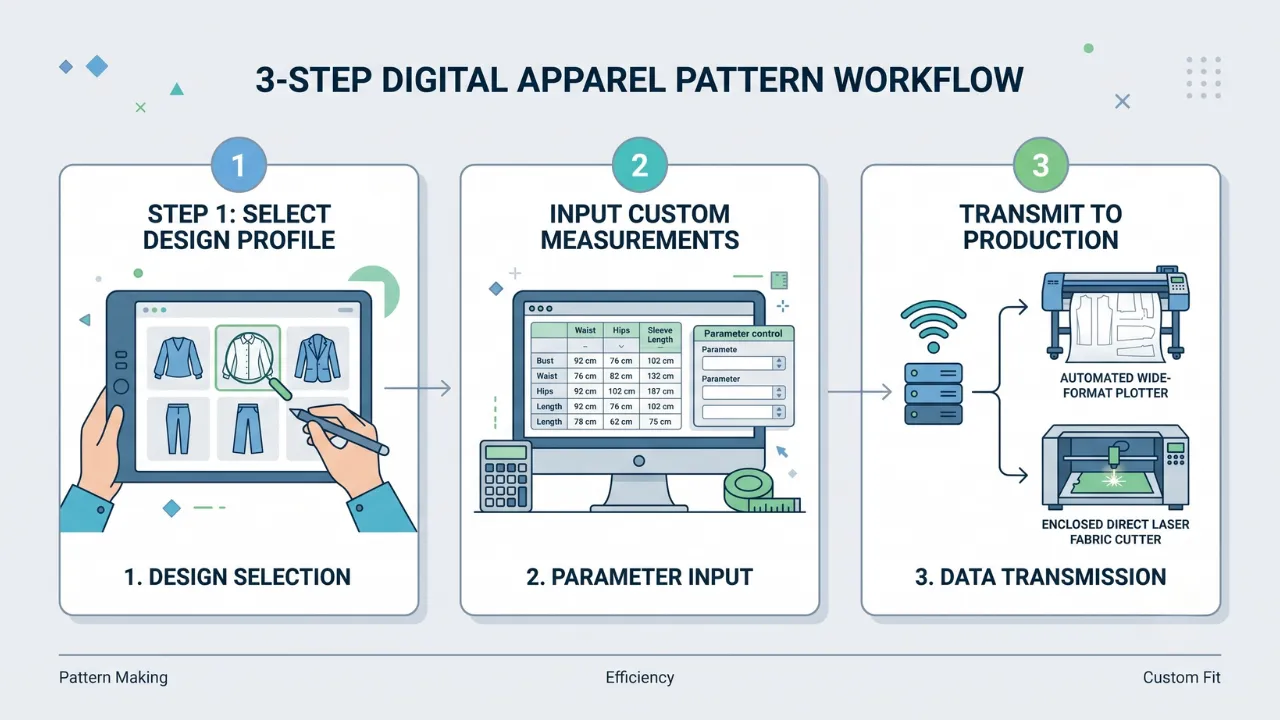
The workflow is streamlined into three intuitive steps:
- Design Selection: Select a base model style from a preloaded library—whether it is a high-neck kurti or a structured chudidhar yoked kameez.
- Metric Input: Enter unique body measurements into parameter fields. The tailoring CAD software algorithms take over, auto-scaling every armhole curve and dart to achieve an exact profile.
- Production Output: The vector blueprint is transmitted to a wide-format plotter or an automated CO2 laser cutting machine for one-pass precision.
Features That Matter: What Dictates Success?
Not all software packages are engineered for the realities of a fast-paced retail environment. When evaluating boutique software, look for these five non-negotiable features:
- Preloaded Regional Libraries: Ensure your platform includes a localized array of ladies' blouses and chudidhar configurations.
- Dynamic Auto-Grading: The code must automatically recompute shoulder slopes and seam clearances as measurements shift.
- Customer Archives: Store and recall historical body metrics to facilitate instant re-orders.
- Hardware Compatibility: Support for standard plotters and digital projectors is essential.
- Localized Service: Choose systems with on-site operator coaching and regional language support.
Who It Suits: Deciding If It Is Time to Transition
Upgrading to a software-driven framework delivers financial payback for three key segments:
- Solo Tailors: Gain monumental drawing speed and achieve the output consistency of a master studio.
- Commercial Boutiques: De-risk your business by preserving design catalogs securely, allowing junior staff to maintain high-volume precision.
- Fashion Institutes: Equip students with the industry-grade skills required by the 2026 manufacturing environment.
Why Indian Fashion Hubs Trust Fashion Dot
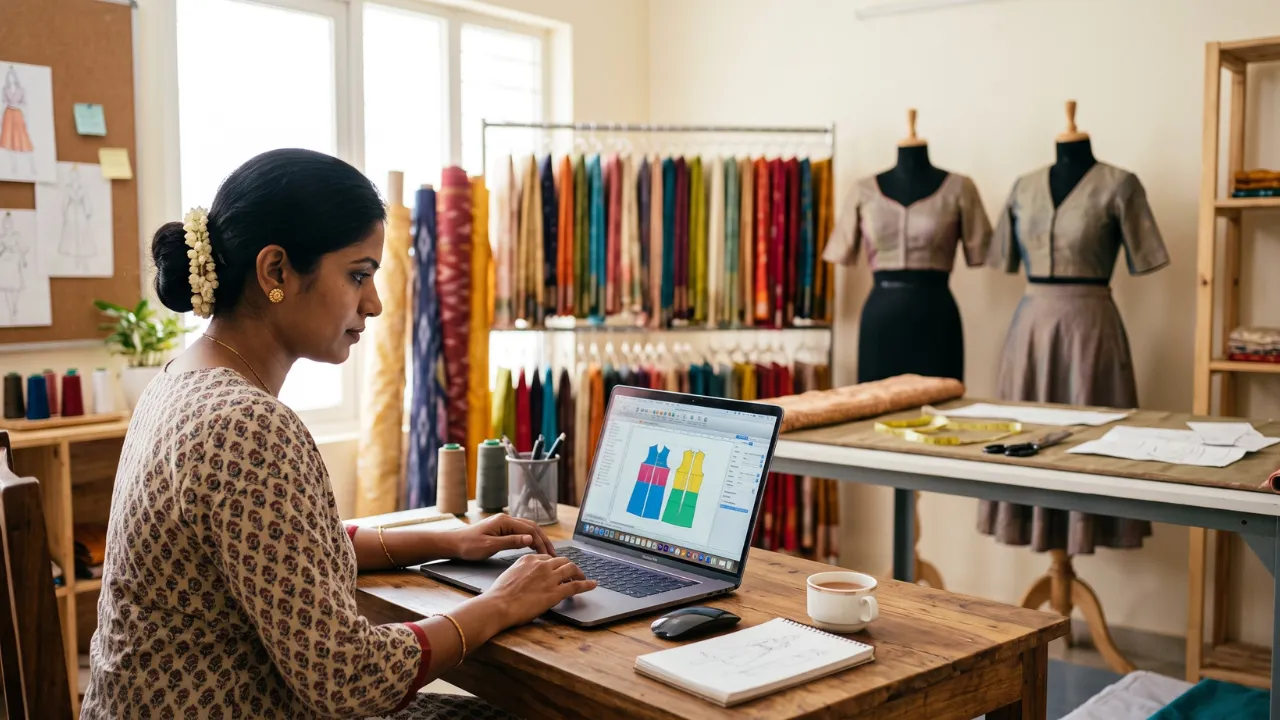
Fashion Dot stands out as the pioneer that built the first computerized cutting-master solution tailored explicitly for specialized ethnic wear in India. While global suites focus on Western styles, our blouse pattern software and chudidhar software were engineered to untangle the complex geometric needs of Indian ethnic fits.
Since 2003, we have optimized operations for over 10,000 tailoring centers. We provide a unified ecosystem, including proprietary CAD suites and heavy-duty hardware, backed by dedicated support branches and language-specific training.
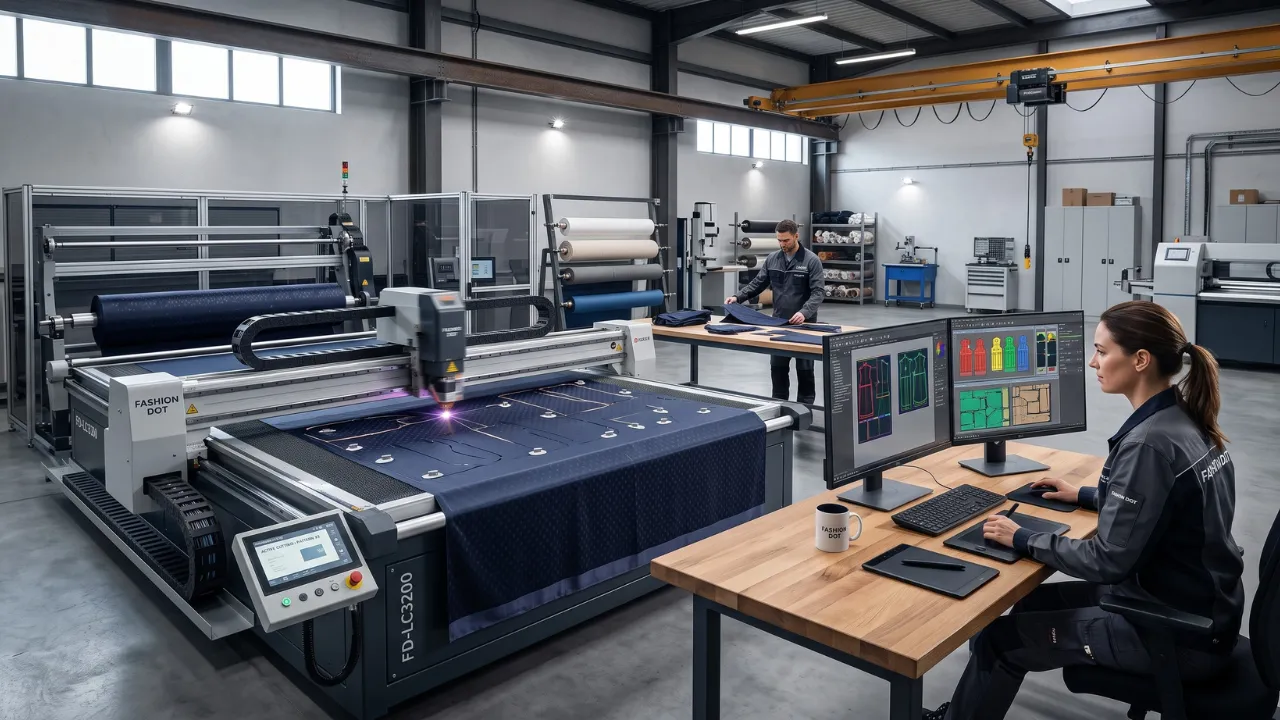
Experience the Complete Fashion Dot Ecosystem Today
Want to observe exactly how your own signature styles, measurement sheets, and production lines perform
under digital software control? Fashion Dot invites you to step directly into the future of automated apparel
manufacturing. Let our engineering team evaluate your shop floor goals and structure the ultimate
configuration to unlock your true commercial scaling capacity
Take complete control over your fitting quality, minimize textile scrap costs by 15%, and scale your daily
output safely
👉 Schedule Your Free Live Technical System Demo & Consultation
What Pattern Making Software Replaces
It is easier to judge the software by what stops happening than by its feature list:
| Stops | Starts |
|---|
| Redrawing the same block for every order | Entering measurements and printing |
| Grading sizes by hand | Automatic grading to the exact figures |
| Adding seam allowance piece by piece | Allowance applied by the software |
| Judging the lay by eye | Pieces placed to use less cloth |
| Re-measuring returning customers | Measurements recalled from the order |
| Depending on one master cutter | Any trained staff member producing the same pattern |
Choosing Between the Options
Pattern making software falls into three groups, and shops often buy the wrong one:
- Industrial CAD. Built for factories and graded size runs. Powerful, expensive, and more than a boutique needs.
- Made-to-measure drafting. Built around one customer’s measurements at a time. This is what most Indian tailoring shops actually want.
- Drawing and illustration tools. Useful for showing a customer a design; they produce nothing you can cut.
The test is simple. If a demo cannot end with a full-size pattern printed and in your hand, it belongs in the third group whatever the brochure says.
What the Software Cannot Do
- It cannot correct a measurement taken over the wrong point.
- It cannot read posture; a sloping shoulder still needs a human adjustment, though that adjustment can then be saved.
- It does not remove the trial fitting on bridal or heavily fitted garments.
- It will not help a shop that does not write measurements down consistently in the first place.
A pattern cutting machine such as a plotter draws the full-size pattern so the cutting is exact every time.
Frequently Asked Questions
Is there free pattern making software?
There are free drawing tools. There is no free tool that drafts a full-size pattern to a customer’s measurements and prints it, because the drafting rules have to be built in.
How long does it take to learn?
Most shops are drafting their own orders within a week when training is done in the language the cutting staff speak.
Does it handle gents and kids garments?
It depends on the modules. Check before buying, because adding a module later usually costs more than including it at the start.
Can I modify a standard pattern?
Yes, and saving the modified version as your own model is where most of the long-term value sits.
What hardware is needed?
A shop computer and a printer or plotter that takes 15-inch continuous roll paper. An ordinary A4 printer cannot produce a usable full-scale pattern.