A salwar is a forgiving garment everywhere except two places. The crotch has to hang deep enough to sit down in, and the mohri has to be wide enough for a foot to pass through. Get either wrong and no amount of ease anywhere else saves it.
Because it is loose, it is also the garment most often cut without measurements at all. The tailor knows the customer, the cloth is standard, and the whole thing is cut from a remembered length. That works until the customer asks for a patiala instead, and the same cutting habit puts twenty pleats into a waistband that cannot carry them.
This is the full measurement list for a salwar, what the mohri figure really has to clear, how much pleat fullness a waist can take, the cloth each version needs, and the four mistakes that cause most re-cutting.
Salwar, Patiala and Churidar Are Three Different Drafts
All three are bottoms for the same kameez and they share almost nothing else. Settle which one she means before you write a measurement down, because the cloth alone differs by more than a metre.
Salwar
Loose from the waist to below the knee, then tapered into a fixed ankle cuff called the mohri. The fullness is taken in with pleats or gathers at the waist. Thigh and knee measurements are clearance figures, not fitting figures, because the leg is not fitted anywhere.
Patiala
A salwar carrying far more fullness in deep pleats that fall from the waist and drape over the mohri. It uses the most cloth of the three and the pleat depth, not the body measurement, decides how much.
Churidar
Fitted from waist to ankle and cut long on purpose so the surplus gathers into rings above the foot. It is the opposite problem: every round measurement on the leg matters, and there is no pleat fullness at all.
If the customer wants the wide straight-leg version instead, that is a palazzo and it has its own draft - take those measurements from the palazzo cutting measurement chart.
The 11 Measurements Every Salwar Needs
Take the round measurements with the tape snug but not pulled. Ease is what you add to the body measurement before drafting. The mohri and the pleat allowance are finished figures, not body measurements, and they are marked as such.
# | Measurement | Where it is taken | Typical ease |
|---|
1 | Waist | Round the natural waist, where the naada or elastic will sit | 0 to 1/2 inch |
2 | Hip (seat) | Round the fullest part of the seat, feet together | 2 to 3 inches |
3 | Waist to hip | Straight down from the waist to the fullest seat point | Nil |
4 | Crotch depth (rise) | Seated on a hard chair, waist down to the seat | 2 to 3 inches |
5 | Full length | Waist down the outside of the leg to the ankle bone | Nil |
6 | Inseam | Crotch point down to the ankle bone | Nil |
7 | Thigh round | Round the fullest part of the upper thigh | 4 to 6 inches |
8 | Knee round | Round the knee cap, leg straight | 4 to 6 inches |
9 | Mohri (finished) | The finished ankle opening, a style figure checked against the instep | See below |
10 | Pleat allowance | Total extra width gathered into the waist, a style figure | See below |
11 | Waistband width | Finished naada casing or elastic width | 1.5 to 2 inches |
The Mohri Is Where Salwars Fail
The mohri is a style figure. The customer picks it from a photograph, and it is usually the first thing she asks for by number. It is also the one figure that has a hard floor set by her body, and the two are checked against each other before you cut, not after.
Take the tape diagonally over the instep and round the back of the heel with the foot flexed. The finished mohri opening must clear that measurement, because that is the widest part of the foot's journey through the cuff. A mohri narrower than the instep produces a salwar the customer cannot put on, and a mohri cuff cannot be let out the way a side seam can.
Typical finished mohri widths run from about ten inches for a narrow modern salwar to about fourteen for a traditional one. Under about nine inches on an adult you are almost certainly below the instep, and the garment needs a side opening instead.
Write the mohri on the sheet as a finished figure and the instep next to it. When the same customer orders again with a different mohri in mind, the instep is the number that has not changed.
Pleat Depth and How Much Fullness a Waist Can Carry
Fullness is added at the waist, and every inch of it has to be folded into a waistband that still has to sit flat under a kameez. The limit is not the drape. It is the bulk at the waist.
Version | Pleat allowance at waist | Typical mohri | Feel |
|---|
Plain salwar, gathered | 6 to 10 inches | 12 to 14 inches | Soft fullness, everyday wear |
Salwar, pleated | 10 to 16 inches | 10 to 12 inches | Defined pleats falling from the waist |
Semi-patiala | 20 to 28 inches | 10 to 12 inches | Visible drape without full patiala bulk |
Full patiala | 36 to 50 inches | 9 to 11 inches | Deep stacked pleats, maximum drape |
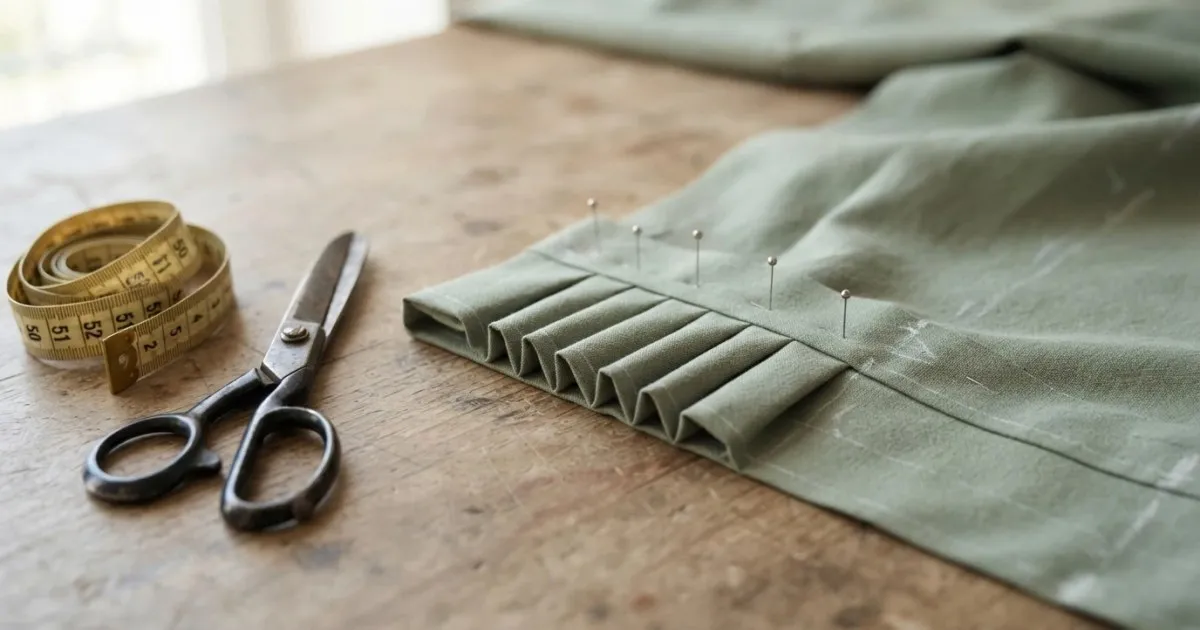
On a full patiala the pleats are what make the garment, so the waist bulk is accepted and the kameez is chosen to sit over it. On a plain salwar worn under a fitted kurti, anything above about sixteen inches of allowance shows as a ridge through the kameez.
Soft fabrics carry more fullness than stiff ones at the same allowance. The same twenty-eight inches that drapes beautifully in a rayon stands out like a lampshade in a starched cotton.
Cloth Needed for a Salwar
Typical single-garment figures for an average adult length of 38 to 40 inches, on plain cloth with no border and no one-way print. A patiala is normally cut using the full width of the cloth, which is why its figure jumps so sharply.
Version | Fabric width | Typical cloth needed |
|---|
Plain salwar | 44 inch | 2.25 metres |
Pleated salwar | 44 inch | 2.5 metres |
Semi-patiala | 44 inch | 3 metres |
Full patiala | 44 inch | 3.5 to 4 metres |
Plain salwar | 36 inch | 2.75 metres |
A border or a one-way print stops the legs nesting head to tail and adds roughly a quarter to half a metre to each figure. If you are costing a full order, the fabric consumption chart has the matching figures for the kameez and the dupatta.
The Four Mistakes That Cause Most Re-Cutting
1. The Mohri Was Taken From a Photograph
The customer asked for a ten inch mohri and her instep measures eleven. The salwar is finished, correct to the order, and she cannot get her foot into it. Check the mohri against the instep in front of her, before cutting.
2. The Crotch Was Drafted Like a Trouser
A trouser rise is cut close. A salwar hangs deliberately low, and copying a pant draft produces a salwar that pulls hard the moment the customer sits or squats. Take the rise seated, and give it two to three inches of ease.
3. The Pleat Allowance Ignored the Waistband
Twenty-eight inches of fullness was gathered into a narrow elastic casing, and the waist now sits in a thick ridge that shows through every fitted kameez. Match the allowance to the style, and widen the waistband when the fullness goes up.
4. The Length Was Measured Without the Footwear
A salwar should finish at the ankle bone, and the mohri sits where it is put. Measured barefoot and worn with heels, it rides up the leg and the proportion with the kameez is lost. Take the length in the footwear she will wear.
The Pieces a Salwar Pattern Produces
A plain salwar produces four pieces: two legs, a mohri cuff pair and a naada casing. The legs are wide panels rather than shaped ones, which is why a salwar can be cut quickly and why a careless cut is so easy to hide until the garment is stitched.
The mohri cuff is cut on the straight grain and interfaced on soft fabric. Without interfacing the cuff collapses after a few washes and the salwar loses its shape at exactly the point the eye goes to.
A patiala is not a wider salwar. It is drafted across the full width of the cloth so the pleats are cut in one piece, and the crotch is built from a separate square gusset rather than a shaped seam. That gusset is what lets deep pleats hang from the waist without dragging at the inside leg.
Pockets, where the customer wants them, are set into the side seam above the widest point of the pleats. Set lower and they open every time she raises her arm.
What Changes When the Salwar Is Drafted on a Computer
Everything above is the same whether you draft with chalk or with software. The pleat arithmetic and the cloth are what change.
Pleat allowance, pleat count and pleat depth are one calculation, and it has to be redone every time the customer changes her mind about the fullness. On CAD the allowance is a parameter, so a plain salwar and a semi-patiala from the same measurements are one setting apart.
The mohri and the instep both stay on the customer's record, which is the pair of numbers that prevents the most common return.
Wide salwar legs waste cloth when they are laid carelessly, because two wide panels that do not nest leave a strip down the middle of the marker. Pattern making software fits them to the width automatically and prints or cuts the marker at full size.
Good Salwar Cutting Starts With the Measurement Sheet
A salwar is easy to cut and easy to cut wrong, because almost nothing about it is fitted and the two things that are fitted are the two that come back. Both of them, the mohri and the rise, are settled before the scissors move.
Take the eleven measurements, check the mohri against the instep in front of the customer, take the rise seated, match the pleat allowance to the style rather than to habit, and confirm whether she means a salwar, a patiala or a churidar before you quote. The cloth alone differs by more than a metre and a half.
Frequently Asked Questions
How many measurements are needed for a salwar?
Eleven: waist, hip, waist to hip, crotch depth, full length, inseam, thigh, knee, mohri, pleat allowance and waistband width. The mohri and the pleat allowance are finished style figures rather than body measurements.
What should the mohri width be?
Typically ten to fourteen inches finished, but it must clear the customer's instep measured diagonally over the foot and round the heel. Below about nine inches on an adult the foot will not pass and the salwar needs a side opening.
How much cloth does a salwar need?
About 2.25 metres on 44 inch cloth for a plain salwar, 2.5 for a pleated one, 3 for a semi-patiala and 3.5 to 4 for a full patiala. On 36 inch cloth add roughly half a metre.
What is the difference between a salwar and a patiala?
A patiala carries far deeper pleats, is cut across the full width of the cloth and uses a square crotch gusset instead of a shaped seam. A plain salwar takes six to ten inches of waist fullness; a full patiala takes thirty-six to fifty.
How deep should the crotch of a salwar be?
Measure the rise seated on a hard chair from the waist to the seat, then add two to three inches. A salwar hangs deliberately lower than a trouser, and a trouser rise copied onto a salwar pulls as soon as the customer sits.
Cut Salwars With Fashion Dot CAD
Fashion Dot CAD drafts salwars, patialas and churidars from the measurements on your sheet, works the pleat allowance and pleat depth out for you, and nests the legs to the width of the cloth you actually have. The customer's mohri and instep stay saved for the next order. See what it costs on the tailoring CAD software price page.
See a Salwar Drafted From Your Own Measurements
Bring one customer's salwar measurements to a free demo and we will draft it live, print the pattern full size and show you the marker on your own fabric width. Book a free demo at a time that suits your shop.