Most tailoring shops depend on one cutting master, and most owners only find out how much when he hands in his notice in the middle of the season. This guide shows what actually walks out of the door with a cutting master, what to do in the first week, how to write the shop's cutting down so it belongs to the shop, and how to train the next person without starting from zero.
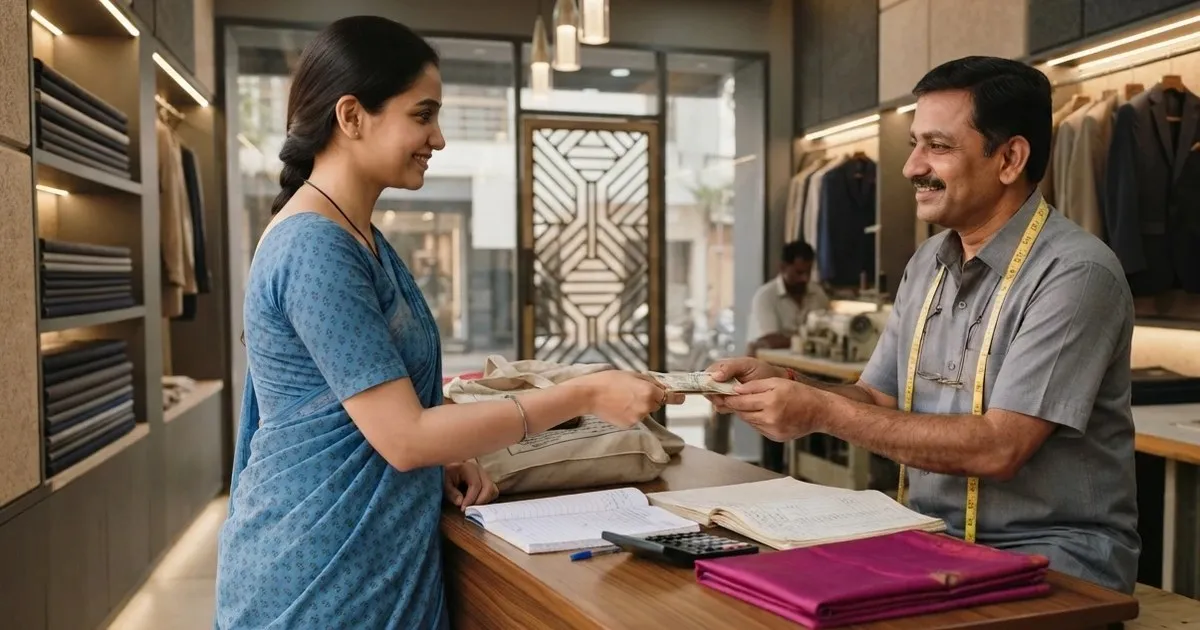
Tailor shop owner showing a young assistant a garment pattern on a tablet at the cutting table
The news usually comes at the worst time. Wedding orders are booked, the delivery board is full, and the cutting master says he is leaving at the end of the month – sometimes at the end of the week.
The machines are still there. The tailors are still there. But nobody else in the shop can turn a measurement sheet into a pattern that fits the way customers are used to, and every order on the board is waiting for exactly that.
A shop that cannot cut without one person does not own its own work. It is renting it, and the rent goes up every time that person asks for a raise.
In this guide you will find:
Why depending on one cutting master is a risk to the whole shop
What actually leaves with him, and how to keep it
What to do in the first week after he goes
How to write the shop's cutting down so it stays
How to train the next person faster
Where tailoring technology fits, and where it does not
Why One Cutting Master Is a Risk to the Whole Shop
Four reasons, and none of them are about whether he is good at the job.
All the Knowledge Sits in One Head
The ease added at the bust, the way an armhole is adjusted for a sloping shoulder, the extra margin left for a customer who always gains weight before a wedding – none of it is written anywhere. It is in his hands, and it leaves when he does.
The Whole Shop Waits for One Person
Every order passes through the cutting table before anyone can stitch. When the cutting master is on leave, unwell or simply slow that day, every tailor behind him waits. One person sets the speed of the entire shop.
Your Regular Customers Are Used to His Fit
A customer who has come back for ten years is not coming back for the shop's name. She is coming back because the blouse fits the way it did last time. Change the cutter and the fit changes, and she notices on the first garment.
He Knows His Value
A cutting master who knows the shop cannot run without him sets his own salary, his own hours and his own leave. That is not a complaint about cutting masters. It is simply what happens when one person holds the only key.
What Actually Walks Out of the Door
When a cutting master leaves, the shop loses more than a pair of hands. Most of what goes can be kept, if it is written down before he leaves.
What leaves | Why it hurts | How to keep it |
|---|
Customer measurements | Repeat customers have to be measured again from scratch | One measurement record per customer, kept by the shop, not in his notebook |
Personal adjustments | A regular customer's fit changes on the next garment | Note every adjustment against the customer's name |
Pattern blocks | Every garment has to be drafted fresh again | Master patterns, on paper or in software, for each garment you cut |
Ease and allowances | The new cutter adds different ease, so sizes drift | Write down the shop's standard ease for each garment |
Design add-ons | Designer necks and backs come out differently each time | A drafted pattern for each design you offer regularly |
Order status | Nobody knows which pieces are cut and which are waiting | A cutting column in the order book, not in memory |
Fabric judgement | More cloth is used per garment, and more is wasted | A simple fabric consumption chart for each garment type |
The first two rows are the ones customers feel. The rest are the ones you feel, at the end of the month.
The First Week After He Leaves
If notice has already been given, the order of work matters more than speed:
Ask for the notebook. Most cutting masters keep one. Ask for it, or for a copy, while relations are still friendly.
Sort the delivery board by date. Wedding and festival orders first, regular customers second, new customers last.
Call the regular customers whose orders are in progress. A customer who hears about the change from you is patient; one who finds out at the fitting is not.
Stop taking new urgent orders for two weeks. Protect the dates you have already promised.
Label every cut piece in the shop with the customer name and order number before he goes.
Spend his last few days beside him and write down how he cuts your three most common garments. Watch, ask, note.
None of this needs a new cutter to be found first. It keeps the shop safe while you look.
Writing the Shop's Cutting Down
Paper blouse pattern pieces, an open record book and tailor's chalk laid out on a cutting table
The long-term fix is simple to describe and slow to do: everything the shop knows about cutting has to live somewhere other than one person's head. For each garment you cut regularly, the record needs to carry:
Record | What it holds | Why it matters |
|---|
Measurement sheet | Every measurement, taken the same way, in the same order | Two people measuring differently is the first source of fit problems |
Shop ease | How much the shop adds at bust, waist, hip and armhole | Keeps sizes the same whoever is cutting |
Master pattern | The base block for the garment | The next cutter starts from your pattern, not from his last shop's |
Customer adjustments | Sloping shoulder, high hip, preferred fit | Regular customers get the same fit every time |
Fabric used | Metres used per garment and size | Shows quickly if a new cutter is wasting cloth |
Re-cut log | Which garments came back, and why | Tells you where the cutting still needs attention |
Start with the garment you cut most – for most shops that is the blouse. One garment recorded properly in a month is worth more than ten recorded half-way.
If your measurements are already scattered across old notebooks, our guide to customer measurement records covers how to bring them into one place.
Training the Next Person
A new cutter who learns from a written record learns in weeks what used to take years of watching:
Choose someone already in the shop if you can. A tailor who stitches your garments already knows your fit.
Train on one garment at a time, starting with the most common one.
Cut from the shop's patterns and ease, not from the habits of the trainee's previous shop.
Check the first ten garments of each type at the fitting stage, before the stitching is finished.
Keep the re-cut log honest. It shows where training is still needed, not who to blame.
Train two people, not one. Otherwise you have only moved the risk to a new name.
The goal is not to replace one cutting master with another. It is to make sure the shop can cut on any day, whoever is at the table.
Where Tailoring Technology Fits
Writing the cutting down on paper works, and every shop should start there. Software takes the same idea further. With tailoring CAD software, the measurements are typed once and the pattern is drafted with the shop's ease, darts and seam allowances already applied – the same way every time, whoever enters the order.
That does not remove the need for a skilled eye at the fitting. It removes the dependence on one person for the drafting, which is where most of the time and most of the risk sits. How shops have made that move is covered on the cutting master alternative page.
Questions Tailors Ask
Can a tailoring shop run without a cutting master?
It can run without depending on one. Someone still has to measure, cut and check the fitting, but when the shop's patterns, ease and customer adjustments are written down or held in software, that work can be done by more than one person.
How long does it take to train a new cutter?
It depends on the garments and the person, and anyone who gives you a fixed number is guessing. Training from written patterns and a measurement record is much faster than training by watching, because the trainee learns your shop's rules instead of working them out.
Should I pay my cutting master more so he does not leave?
Sometimes that is the right decision, and a good cutter is worth paying well. But a raise solves this month's problem, not the shop's. Pay him well and write the cutting down anyway.
What should I ask for before my cutting master leaves?
His notebook or a copy of it, the status of every order on the board, a label on every cut piece, and a few days of his time to show how he cuts your most common garments.
Will my regular customers notice the change?
Usually on the first garment, if the fit changes. Tell them before the fitting, take their measurements again, and check their first order more carefully than usual.
Does CAD software replace the cutting master?
It replaces the drafting, not the judgement. The pattern is generated from the measurements, but someone still needs to measure well, choose the right fabric and check the fit.
Keep the Cutting in the Shop
The safest time to make your cutting independent of one person is before anyone hands in notice. The quickest way to see what that looks like is to watch a pattern drafted from measurements you brought yourself.
Book a free demo – on-site or online, in your language, with no commitment.