A customer judges a garment in about five seconds, and almost nothing she is looking at in those five seconds is the cutting. She is looking at whether the seams lie flat, whether the collar sits, whether the hem is even and whether it looks like something that was bought rather than something that was made.
All of that is the last hour of work, and in most shops it is the hour that gets squeezed when the day runs late. A garment cut and stitched well and pressed badly looks worse than a garment cut adequately and finished properly. That is unfair, and it is true.
This is what pressing actually does, the heat each cloth will take, the four ways an iron ruins a finished garment, and the check to run before anything leaves the shop.
Pressing Is Construction, Not Cleaning Up
Ironing flattens a garment. Pressing shapes it. They use the same tool and they are not the same job, and a shop that only does the first one at the end of the day is leaving shape on the table.
Press as You Sew, Not at the End
Every seam is pressed before another seam crosses it. Once two seams cross, the first one can never be pressed properly again, and the lump where they meet stays for the life of the garment. This single habit separates a finished-looking garment from a home-made-looking one more than any other.
Press, Do Not Drag
Lift the iron and put it down. Dragging it across cloth stretches the piece, most of all on a bias edge or a curved seam, and a stretched neckline or armhole cannot be pulled back.
Shape Over a Curve, Not a Flat Board
A sleeve head, a bust dart and a collar are three dimensional. Pressed flat on a board they are flattened into the garment. Use a rolled towel or a tailor's ham for anything curved, and the shape you built in at the cutting table survives.
Let It Cool Before It Moves
Cloth takes its shape as it cools, not while it is hot. A seam pressed and then immediately picked up and moved goes back to what it was. Press it, leave it flat for a minute, then move on.
Heat, Steam and Which Cloth Takes What
Most pressing damage is one setting too hot on a fabric nobody checked. When in doubt, test on a scrap or on the inside of a seam allowance first, every time.
Fabric | Heat | Steam | Press cloth |
|---|
Cotton, linen | High | Yes, freely | Not needed on light colours |
Denim | High | Yes | Not needed |
Wool and suiting | Medium | Yes, heavily | Always, and press from the reverse |
Silk | Low to medium | Sparingly, water spots | Always, and press dry from the reverse |
Rayon and viscose | Medium | Light | Recommended; it scorches easily |
Polyester, georgette, chiffon | Low | Light | Always; it melts before it looks hot |
Satin | Low | No | Always, and never press the face |
Velvet and pile | Low | Steam only, no contact | Press on a needle board or against itself, face down |
Zari and sequins | Low | No | Always, and press around the work, not over it |
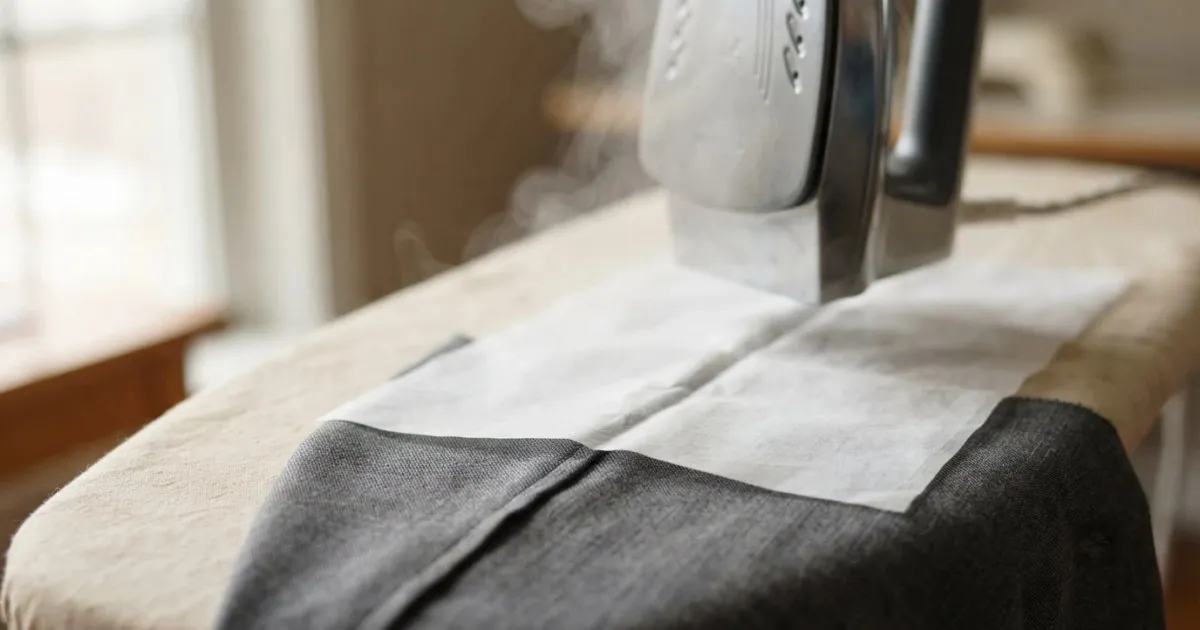
The Four Ways an Iron Ruins a Finished Garment
1. Shine on Dark Cloth
Pressing dark suiting or a dark cotton on the face flattens the surface fibres and leaves a permanent shine along every seam. It cannot be undone. Press dark cloth from the reverse, with a press cloth, always.
2. Melted Synthetic
Polyester, net and cheap georgette melt at a temperature that does not feel dangerous, and the damage appears as a hard glazed patch that cannot be repaired. Test on a scrap and keep a press cloth between the iron and anything synthetic.
3. Water Spots on Silk
A drop of water from a steam iron leaves a ring on silk that shows in photographs even after it dries. Press silk dry, from the reverse, with a cloth, and empty the iron before you start.
4. Seam Imprints Showing Through
A seam allowance pressed flat from the face prints its edge onto the good side of the garment as two faint lines. Press seams open over a rolled edge or slip strips of paper under the allowances so the edge cannot print through.
The Check Before It Leaves the Shop
Run this on every garment, not only on wedding orders. It takes two minutes and it catches the things a customer will find in the first five seconds.
Check | What you are looking for |
|---|
Turn it inside out | Loose threads, unfinished seam allowances, skipped overlocking |
Hold it up by the shoulders | Does it hang straight, or does one side drop |
Check the hem against a table edge | Even all the way round, no dipping at the side seams |
Fasten every button, hook and zip | They work, they line up, and nothing gapes at the bust or waist |
Look at the face in daylight | Shine, press marks, chalk lines, water spots |
Count the pieces | Blouse and lining, dupatta, belt, spare button, cut cloth to be returned |
Check against the order book | Right customer, right garment, right date, advance recorded |
Give the customer back the leftover cloth, even the small pieces. It is hers, it costs you nothing, and a shop that returns it is a shop that is trusted with the next order.
Packing Is Part of the Work
A garment that is pressed properly and then folded into a plastic bag arrives creased, and the customer sees the creases rather than the pressing. Hang what can be hung, fold along seam lines rather than across the middle of a panel, and put tissue inside a fold on silk so the fold does not set as a crease.
Tag every garment with the customer's name and the order number, and tag every piece of a family order separately. In a wedding order with twelve garments for seven people, an untagged blouse is a blouse that will be given to the wrong person on a busy morning.
Finishing Is the Cheapest Marketing a Shop Has
Nobody photographs a well cut armhole. They photograph the garment on the day, and what shows in that photograph is the finish: flat seams, a collar that sits, a hem that is level, and no shine on the shoulders.
That photograph is how a tailoring shop actually grows, and there is more on the rest of it in how to get more customers for your tailoring shop.
It is also the cheapest quality improvement available. A tailor's ham costs less than one re-cut, a press cloth costs nothing, and pressing each seam as it is made adds minutes to a garment rather than hours.
When the Check Finds Something
The point of a delivery check is to find the fault before the customer does, which is the difference between a correction and a complaint. Fix it, and then write down what it was.
A shop that records what its delivery check catches learns something in a month. If the same fault appears repeatedly it is not carelessness at the machine, it is something upstream: a pattern piece that is a fraction out, a measurement being taken inconsistently, or a seam allowance that is too tight to finish cleanly.
When the fault is in the fit rather than the finish, the garment alteration guide works backwards from the symptom to the cause.
And when the same customer's garments repeatedly need the same correction, the answer is in the record rather than in the workroom - see the measurement book every shop loses.
What a Good Pattern Gives the Person Finishing
Pressing and finishing are hand skills and they stay hand skills. What a drafted pattern changes is how much guessing is left by the time the garment reaches the iron.
A printed pattern carries its notches, its balance marks and its seam allowances on the piece. Seams that are meant to meet actually meet, so there is nothing to ease in at the last minute and nothing to press flat that should not have been full in the first place.
That is most of the difference between finishing a garment and rescuing one - pattern making software prints the pattern full size with the marks on it.
The Last Hour Is the One the Customer Sees
Cutting decides whether a garment fits. Finishing decides whether it looks like it was worth what she paid. The second one is judged first, by someone standing in your shop with the garment in her hands.
Press each seam as it is made, press dark cloth from the reverse with a cloth over it, shape curves over a curve, test the heat on a scrap, and run the same two minute check on every garment before it is packed. None of that needs a new machine, and all of it shows.
Frequently Asked Questions
What is the difference between pressing and ironing?
Ironing drags the iron across cloth to flatten creases. Pressing lifts and places it to set a shape. Dragging stretches curved and bias edges, which is why a neckline or an armhole can come out of the iron bigger than it went in.
Why does dark cloth go shiny when pressed?
The heat flattens the surface fibres on the face of the cloth and they reflect light. It is permanent. Press dark suiting and dark cotton from the reverse with a press cloth between the iron and the fabric.
Can silk be pressed with steam?
Sparingly and preferably not. A drop of water leaves a ring that shows even when dry. Press silk dry from the reverse with a press cloth, and empty the iron before starting.
Why do seam allowances show through on the right side?
The edge of the allowance prints through when it is pressed flat from the face. Press seams open over a rolled edge, or slip a strip of paper under each allowance so the edge cannot imprint.
What should be checked before delivering a garment?
Turn it inside out for loose threads and unfinished seams, hang it by the shoulders to see it falls straight, check the hem is level, fasten every closure, look at the face in daylight for shine and chalk, count the pieces and check it against the order book.
Cut It So There Is Less to Rescue
Fashion Dot CAD prints patterns full size with notches, balance marks and seam allowances on the piece, so seams meet where they should and the finishing is finishing rather than correction. See what it costs on the tailoring CAD software price page.
See a Pattern Printed With Its Marks
Bring one customer's measurements to a free demo and we will draft the garment live and print the pattern full size, notches and all, on your own fabric width. Book a free demo at a time that suits your shop.