Every tailoring shop hears it: the blouse is tight at the arm, the kurti pulls at the hip, the shoulder sits wrong. How the next five minutes go decides whether the customer comes back. This guide shows what to say at the counter, how to find whether the fault came from measuring, cutting, stitching or something else, who should pay for the alteration, and how to stop the same complaint happening again.
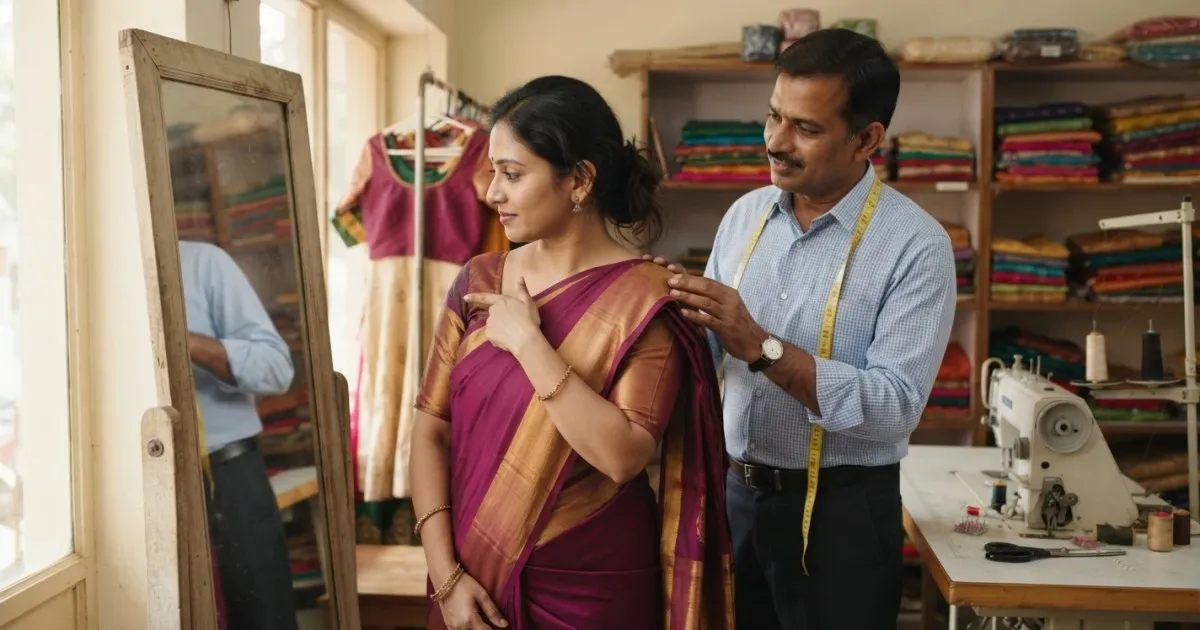
Tailor checking the shoulder fit of a blouse as the customer points out the problem at the mirror
She tries the blouse on, looks in the mirror, and her face changes before she says a word. The shop is busy, there are three people waiting, and the first instinct is to defend the work – the measurements were right, the fabric shrank, she must have gained weight.
Sometimes that is even true. It does not matter. A customer who is told the problem is her fault leaves with the garment and does not come back, and she tells her sister, her neighbour and her office why.
A fit complaint is not an attack on the shop. It is a customer telling you, before she tells anyone else, what needs fixing.
In this guide you will find:
Why fit complaints turn into lost customers
What to say – and not say – in the first five minutes
How to find the real cause of a fit problem
A fair rule for who pays for the alteration
How to check the fix before the customer sees it again
What the complaint log has to record
Why Fit Complaints Turn Into Lost Customers
Four reasons, and the garment is only one of them.
The Shop Argues Before It Listens
The first sentence the customer hears sets the tone. If it is an explanation of why the shop is not at fault, the conversation is already lost, whatever happens to the garment afterwards.
Nobody Finds the Real Cause
The seam is let out, the garment goes back, and nobody asks why it was tight in the first place. The same measurement habit or the same pattern produces the same complaint next month.
The Fix Takes Too Long
A customer who was promised the garment for a function, and now has to come back twice more, remembers the waiting far longer than the original problem.
Who Pays Is Decided in the Moment
When there is no rule, the owner decides based on mood and how busy the shop is. Two customers with the same problem get two different answers, and both of them notice.
The First Five Minutes at the Counter
What happens before anyone picks up a seam ripper matters most:
Thank her for trying it on in the shop. A problem found at the trial is far cheaper than one found at the wedding.
Ask her to show you exactly where it feels wrong, and look – do not argue with what she feels.
Check the fit yourself on her: pinch, pin and mark while she is wearing it.
Check the order record: the measurements taken, the style chosen, the fabric used.
Tell her what you will do and when it will be ready. Give a date, not “soon”.
Do not discuss blame or charges until you know the cause.
A calm, specific answer is what she came for. The blame can be worked out later, privately, at the cutting table.
Finding the Real Cause
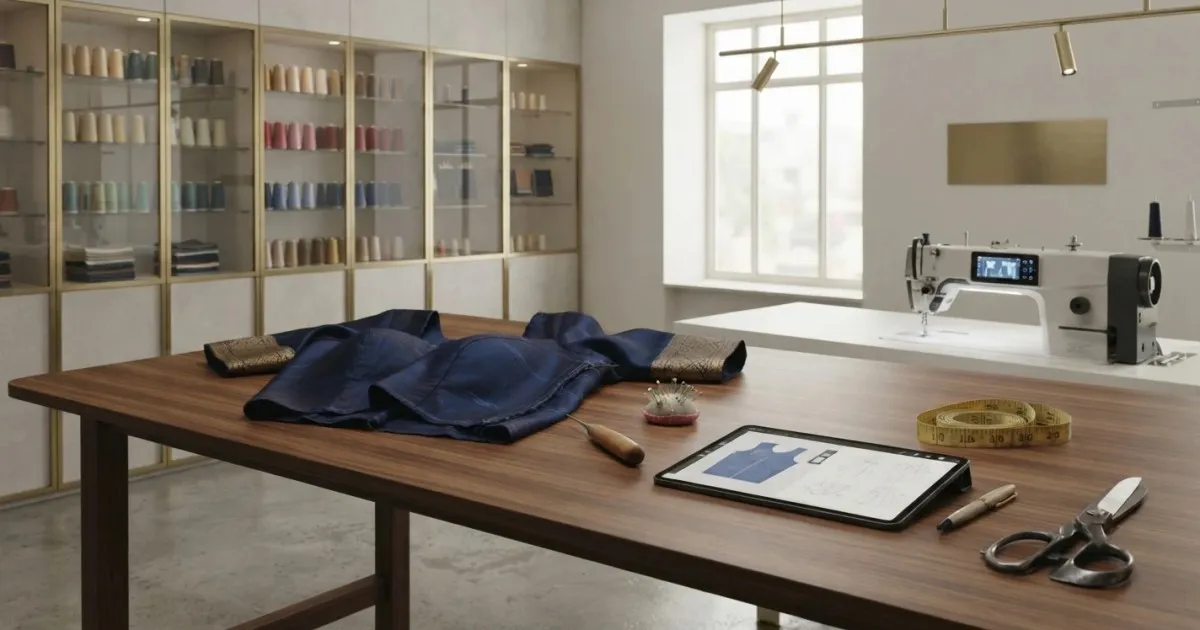
Silk blouse laid out on the cutting table and checked against its pattern on a tablet
Most fit problems come from one of five places. The symptom usually points to which one:
Symptom | Likely cause | Where to look |
|---|
Tight at the bust or armhole on a new customer | Measuring | Was the tape held flat, and was ease added? |
Same complaint on several customers’ garments | Pattern or cutting | The base block or the shop’s standard ease |
Uneven sides, twisted seams, puckering | Stitching | Seam allowances and how the pieces were joined |
Fitted at trial, tight after the first wash | Fabric | Was the cloth pre-washed or tested for shrinkage? |
Fitted last year, tight now | Body change | Date of the last measurement on record |
Fits, but the customer says it looks wrong | Style expectation | The design photo and what was agreed |
Check the garment against the pattern before deciding. If the pattern is right and the garment is not, the fault is in cutting or stitching. If the garment matches the pattern, look at the measurements.
If measurements are the most common cause in your shop, our guide on how to take body measurements for tailoring covers where the errors usually come from.
Who Pays for the Alteration
Decide the rule once, print it on the order slip, and apply it the same way to everyone:
Cause | Who pays | Why |
|---|
Measuring, cutting or stitching by the shop | The shop | The customer paid for a garment that fits |
Fabric shrinkage on cloth the shop supplied | The shop | The shop chose the cloth |
Shrinkage on customer’s own unwashed cloth | Shared or customer | Only if the risk was explained when ordering |
Body change after a recorded measurement | Customer, at a reduced rate | The garment matched the measurements given |
Change of mind about style after approval | Customer | It is a new request, not a correction |
Any problem found at the trial fitting | The shop | That is what the trial is for |
Printed in advance, the rule is accepted. Announced at the counter, the same rule sounds like an excuse.
How to make the actual corrections – letting out, taking in, re-setting sleeves – is covered in our garment alteration guide for tailors.
Fixing It and Checking Before She Sees It
The second delivery has to be better than the first, because she will look at it more carefully:
Give the altered garment priority over new orders. She has already waited once.
Have someone other than the person who made the fault check the fix.
Check it against the corrected measurements, not just by eye.
Press and finish it as if it were a new garment.
Ask her to try it on in the shop again, and stay with her while she does.
The final check before any garment leaves the shop is covered in more detail in our guide to pressing, finishing and the delivery check.
What the Complaint Log Has to Record
One complaint is a problem to fix. Ten complaints, written down, are a lesson. For every fit complaint, record:
The order number, garment type and who measured, cut and stitched it.
What the customer said was wrong, in her words.
The cause you found, from the table above.
What was done, how long it took and who paid.
Whether the customer has ordered again since.
Look at the log once a month. If most complaints trace back to one garment, one person or one step, that is where the training – or the pattern – needs work.
Where CAD Helps
Many repeat fit problems come from the pattern being drafted fresh every time, slightly differently by different people. With tailoring CAD software, the pattern is generated from the stored measurements with the shop’s ease and allowances already applied, so a corrected measurement stays corrected for every future order.
It does not remove the need for a careful trial fitting. It removes one of the most common reasons the trial goes wrong.
Questions Tailors Ask
What should I say when a customer says the garment does not fit?
Thank her for trying it on, ask her to show you where it feels wrong, check it on her, and tell her what you will do and when. Leave blame and charges until you know the cause.
Should I charge for alterations after delivery?
Not when the fault was the shop’s. When the cause is a body change or a change of mind after approval, a fair charge is reasonable – as long as the rule was printed on the order slip.
How do I know if the problem is the measurement or the stitching?
Compare the garment with its pattern. If the garment does not match the pattern, the problem is in cutting or stitching. If it matches, check the measurements and how they were taken.
What if the customer has gained or lost weight?
Check the date of the last measurement on record. If it is recent and the garment matches it, explain gently and offer the alteration at a reduced rate. Re-measure her before the next order.
How can I reduce fit complaints?
Measure the same way every time, keep a trial fitting for new customers and complex garments, record every complaint and its cause, and fix the most common cause first.
What if the customer is still unhappy after the alteration?
Ask her to try it on in the shop and fix it there if possible. If it cannot be made right, a partial refund or a re-make on the shop’s cost is often cheaper than losing her and everyone she tells.
Turn Complaints Into Repeat Customers
A complaint handled well often earns more loyalty than an order that went perfectly, because the customer has seen how the shop behaves when something goes wrong. The quickest way to see how consistent patterns reduce fit problems is to watch one drafted from measurements you brought yourself.
Book a free demo – on-site or online, in your language, with no commitment.